At the BRICS Culture Summit in Bhopal, delegates enjoyed exhibitions showcasing India’s cultural history shaped by trade, faith, and knowledge.
Bhopal, August 5, 2026
For many delegates at the BRICS Culture Summit, the most memorable journey on Wednesday did not begin in a meeting room. It began inside three exhibition galleries that carried them across oceans, civilisations and centuries of India's cultural history.
The specially curated exhibitions on Project Mausam, Brihattar Bharat and Gyan Bharatam emerged among the biggest attractions of the summit, offering a vivid reminder that India's engagement with the world has long been shaped not only by diplomacy, but also by trade, faith, knowledge and culture. If the formal meetings focused on strengthening cultural cooperation, the exhibitions explained why such cooperation still matters.
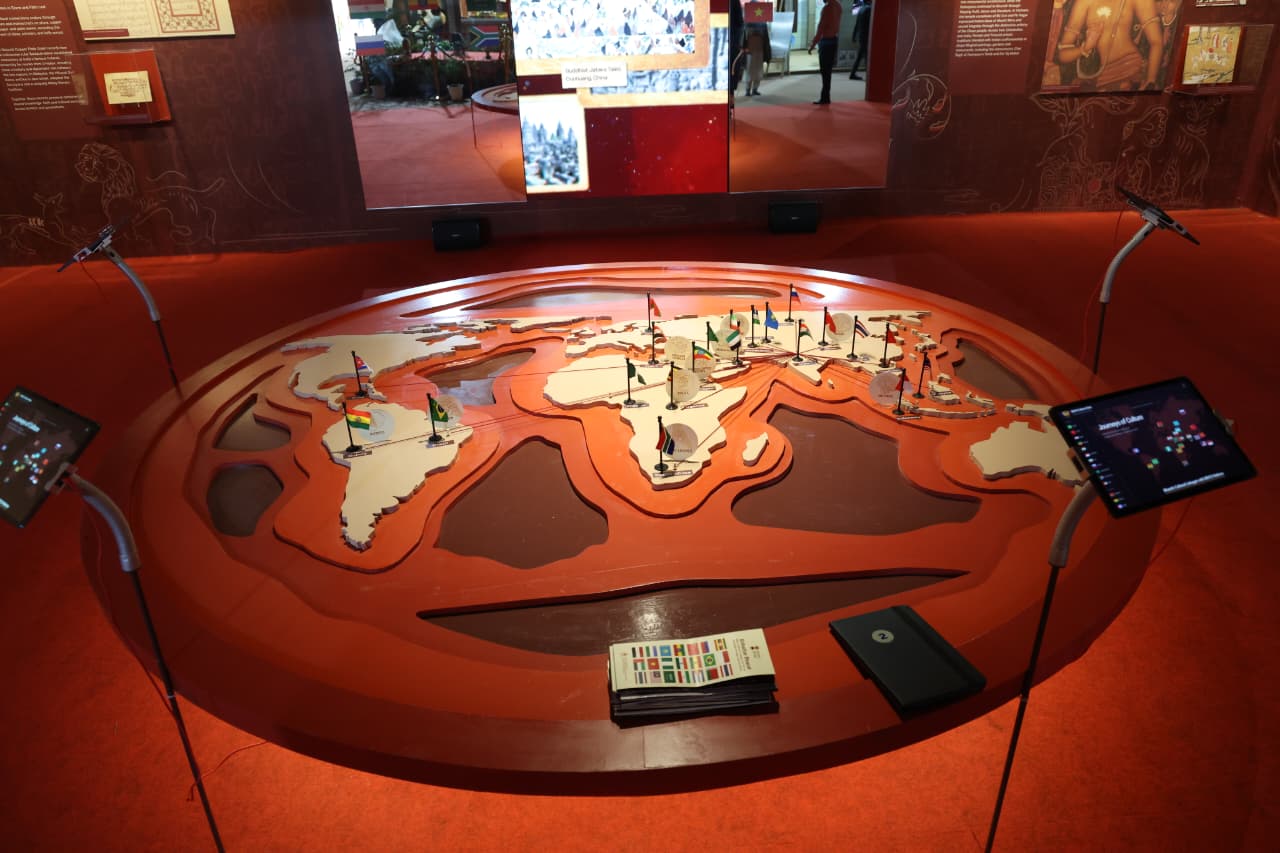
The first stop for most visitors was Project Mausam, an immersive exhibition that traces the ancient maritime routes shaped by the seasonal monsoon winds across the Indian Ocean. Long before modern diplomacy and political borders, these sea routes carried merchants, monks, scholars and ideas between India, Southeast Asia, East Africa and the Gulf.
An immersive film introduces visitors to that forgotten world before interactive displays explain how trade, migration, religion and knowledge travelled together for more than two millennia. One corner even encourages visitors to fold paper boats through an origami activity titled "Sail with the Monsoon", inviting them to write their own thoughts on shared heritage before setting the symbolic boats afloat.
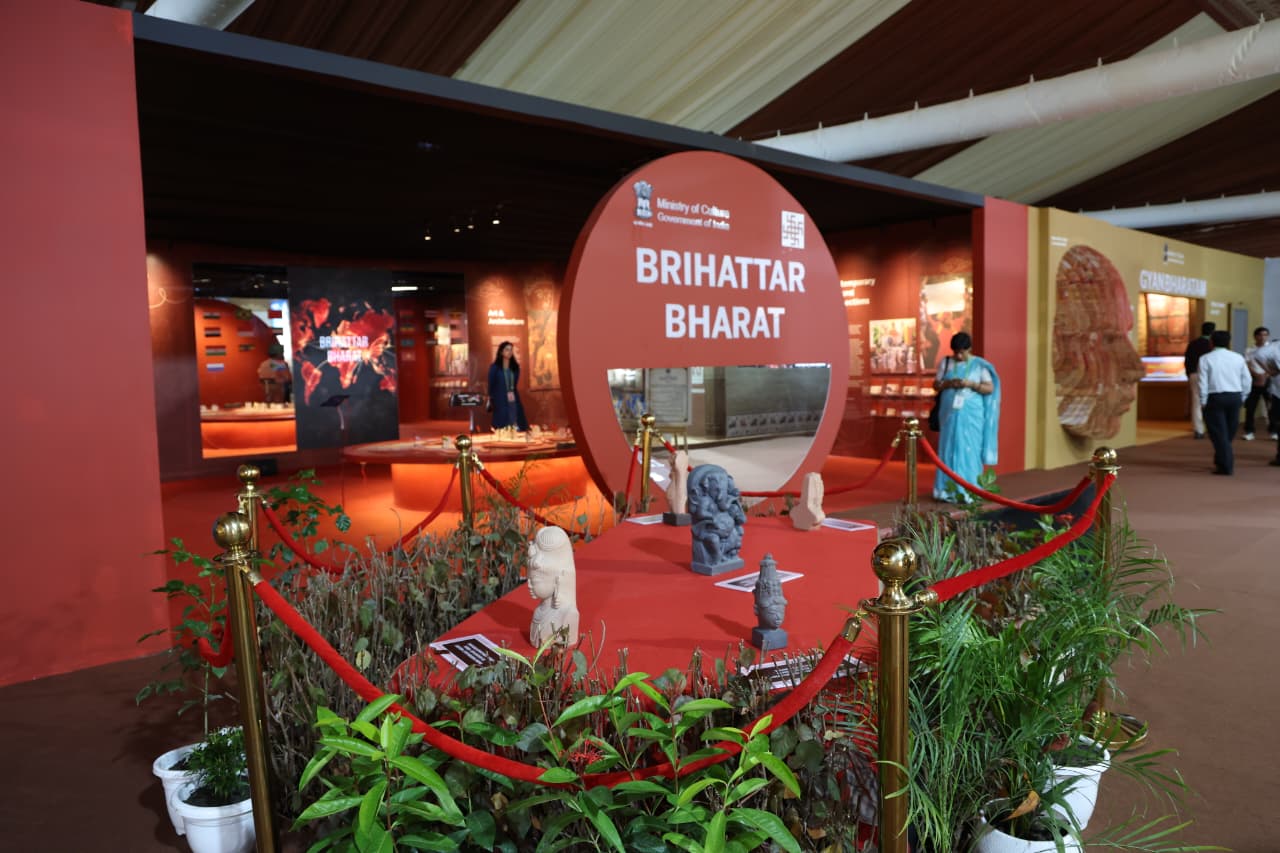
If Project Mausam celebrates journeys across the sea, the second exhibition, Brihattar Bharat (Greater India), explores journeys of ideas. It reminds visitors that India's influence travelled not through conquest but through culture, education and commerce.
Ancient inscriptions, Nalanda records and rare manuscripts tell stories of Buddhist monks travelling across Asia, traders carrying Indian traditions overseas and artists creating cultural bridges that still survive today. Exhibits highlight Indonesia's Prambanan Temple, Thailand's classical traditions, Vietnam's Cham heritage and the continuing influence of Indian music, architecture and philosophy across Asia. The exhibition reinforces that the idea of "Greater India" is rooted in cultural dialogue and shared human values rather than political expansion.
The third gallery shifts the focus from history to knowledge. Named "Gyan Bharatam", it showcases India's manuscript tradition through digital technology. Rare works on mathematics, philosophy, literature and spirituality are displayed alongside AI-enabled preservation techniques that are helping protect fragile manuscripts for future generations.
Among the most admired exhibits are centuries-old editions of Lilavati, Rekhaganit, illustrated versions of the Bhagavad Gita, Panchatantra, Nirukta and other priceless texts that demonstrate the depth of India's intellectual heritage. Officials said more than 11.9 million manuscripts have already been documented under the national initiative, making it one of the world's largest efforts to digitally preserve written knowledge.
Just outside the exhibition halls, Madhya Pradesh presents its own cultural story. Designed around the iconic gateway of the Sanchi Stupa, the state pavilion introduces delegates to the region's remarkable diversity—from Khajuraho, Bhimbetka, Gwalior, Mandu, Orchha and Maheshwar to its tiger reserves, waterfalls and tribal traditions. Live demonstrations of Gond painting, pottery and Nandana block printing, along with products made by self-help groups under the Vindhya Valley brand, have become popular stops for international visitors eager to experience the state's living traditions.
What makes these exhibitions remarkable is that they do more than display artefacts. Together they tell a larger story-that India's engagement with the world has long been built on the movement of ideas, knowledge, faith and culture. In many ways, the exhibition halls complement the official BRICS discussions taking place next door.
The exhibitions will also open to the public on August 7 and 9, giving residents of Bhopal an opportunity to walk through centuries of history without leaving their city. For a summit centred on cultural cooperation, that may prove to be one of its most enduring legacies.