India hosted the 18th BRICS Summit in New Delhi, hosting talks with Russian President Vladimir Putin, Iranian President Masoud Pezeshkian, and Chinese President Xi Jinping. Discussions covered trade, defence, energy, and regional conflicts. India seeks to bolster partnerships despite Western sanctions and geopolitical divisions.
New Delhi, September 12
Prime Minister Narendra Modi held separate talks with Russian President Vladimir Putin and Iranian President Masoud Pezeshkian as India opened a packed round of diplomacy around the 18th BRICS Summit in New Delhi. The discussions covered trade, defence, energy and the conflicts in Ukraine and West Asia. Maritime security and the safety of Indian seafarers were also high on the agenda.
Chinese President Xi Jinping arrived in the national capital on Saturday morning with a high-level delegation. It is his first visit to India in seven years. The arrival of Putin, Pezeshkian and Xi has placed New Delhi at the centre of important diplomatic conversations. The summit is being held at a time when wars, sanctions and tensions among major powers are affecting energy supplies and global trade.
Prime Minister Narendra Modi and President Putin reviewed India-Russia relations during their meeting on Friday. The talks covered trade, defence, energy, fertilisers, critical minerals and mobility. Both sides agreed to further strengthen their Special and Privileged Strategic Partnership. The two leaders also discussed the conflicts in West Asia and the Black Sea region, which have disrupted maritime trade and put Indian seafarers at risk. India reiterated its call for dialogue and diplomacy and offered support for peace efforts.
Russia remains an important energy and defence partner for India. Bilateral trade has grown sharply in recent years, led largely by India’s purchase of Russian crude oil. India and Russia have set a target of increasing bilateral trade to $100 billion by 2030. Their trade stood at nearly $70 billion in 2024-25.
New Delhi has defended its energy partnership with Moscow despite pressure from Western countries. India maintains that its large population and growing economy require affordable, reliable and secure energy supplies. The two countries also discussed ways to expand trade beyond oil. Fertilisers, agriculture, pharmaceuticals, machinery and critical minerals offer room for wider cooperation. Critical minerals are becoming increasingly important for India’s electric vehicle, electronics and clean-energy sectors. Russia’s large reserves could help India diversify its sources and reduce supply risks.
Prime Minister Narendra Modi presented Putin with a Russian translation of the Thirukkural. The ancient Tamil work contains couplets on ethics, governance, justice and human conduct.
At the BRICS Business Forum, the Russian President called for closer cooperation in trade, payments, technology, investment and infrastructure. He said the world economy was undergoing deep structural changes and new centres of growth were emerging. Putin also criticised Western sanctions and trade restrictions. He accused Western countries of trying to preserve their earlier dominance by putting pressure on countries pursuing independent policies. He said BRICS could create a more stable platform for global growth. At the same time, he maintained that the grouping was not directed against any country.
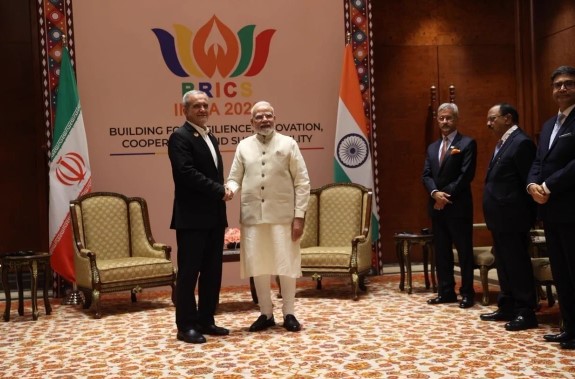
Prime Minister Narendra Modi later held talks with President Pezeshkian. It was their second meeting in less than two weeks. They had earlier met at the SCO Summit in Bishkek on August 31. The visit is Pezeshkian’s first to India as Iranian President. Prime Minister Narendra Modi thanked him for attending the BRICS meetings despite the difficult situation facing his country. The two leaders reviewed bilateral relations and exchanged views on the continuing conflict in West Asia.
Prime Minister Narendra Modi repeated India’s call for dialogue and diplomacy. He stressed the need for continued efforts to restore peace and stability in the region. He also called for the protection of freedom of navigation and maritime commerce. The safety and well-being of seafarers, he said, remained an important concern for India. The conflict has disrupted major shipping and energy routes. India has also been affected by attacks on commercial vessels in which Indian crew members lost their lives.
India and Iran share longstanding cultural and civilisational ties. Iran is also important to India’s plans for connectivity with Afghanistan and Central Asia through Chabahar Port. However, bilateral trade has remained below its potential because of US sanctions and restrictions on financial transactions. India stopped importing Iranian crude directly after the sanctions were tightened.
Prime Minister Narendra Modi said the two countries should move ahead with a long-term and mutually beneficial approach. Pezeshkian also sought greater cooperation among BRICS countries. At the Business Forum, he called for wider use of national currencies and stronger financial arrangements to protect legitimate trade from external pressure.
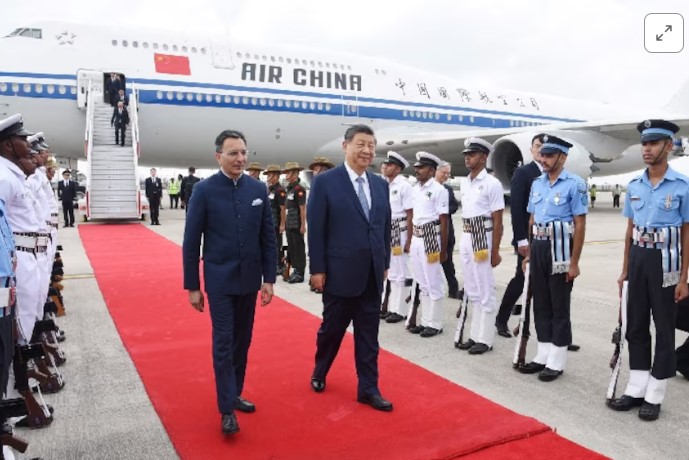
The diplomatic activity gathered further momentum with Xi Jinping’s arrival on Saturday. The Chinese President received a red-carpet welcome, accompanied by traditional Indian dance performances. Xi arrived with a high-level delegation that included Foreign Minister Wang Yi and Cai Qi, a member of the Standing Committee of the Communist Party of China’s Politburo. His visit comes as India and China make cautious efforts to stabilise relations after years of border tension.
Ties deteriorated sharply following the Galwan Valley clash in 2020. Twenty Indian soldiers and four Chinese troops were killed in the confrontation. A border agreement reached in October 2024 and subsequent diplomatic and military talks helped begin a gradual thaw. Direct air connectivity between the two countries is also being restored.
Prime Minister Narendra Modi and Xi are scheduled to hold bilateral talks on the sidelines of the summit. It will be their third meeting in three years and their first in India since relations began showing signs of improvement.
The meetings with Putin and Pezeshkian, followed by Xi’s arrival, have given the BRICS Summit a strong diplomatic opening. India is using the gathering to strengthen old partnerships, manage difficult relationships and keep dialogue moving amid growing divisions across the world.