The Line of Control in Kashmir divides not just territories but destinies, contrasting sharply in infrastructure, governance, and daily life on either side.
New Delhi/ Bhopal, August 4, 2026
Draw a line through a mountain range and you divide more than territory. Over time, you divide destinies. The people on either side of the Line of Control in Kashmir share a language, a landscape and, for much of history, a common story. What they no longer share is a present. To travel in imagination from one side to the other today is to move between two versions of what life in the Himalayas can be. The distance between them is measured not in kilometres but in the texture of ordinary days.
This is not, for a moment, a claim that everything is settled on the Indian side, or that the Valley's long ordeal with violence has ended. It has not, as the Pahalgam attack of 2025 showed with cruel clarity. But the trajectory of daily life, of trains and hospitals and schools and the small dignities of governance, has diverged so sharply that the two territories now offer a study in contrast worth examining on its own terms, away from the noise of politics.
The Journey and the Isolation
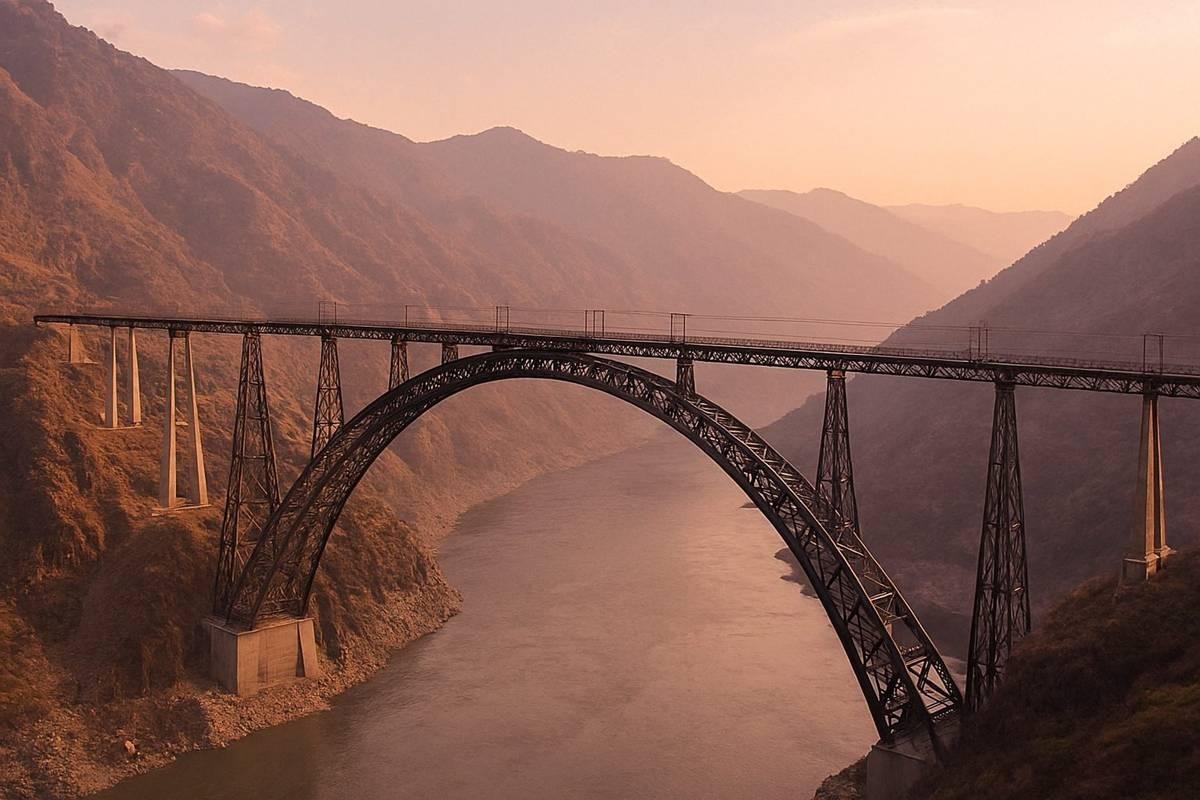
Begin with the simple matter of movement. On the Indian side, the train now reaches the Kashmir Valley. The Udhampur-Srinagar-Baramulla line threads through tunnels and across the Chenab gorge on the highest railway bridge in the world, binding the Valley to the national network and, with it, to markets, jobs and the rest of the country. Roads and tunnels that keep the passes open through winter have followed.
On the other side, the contrast is severe. The capital of Pakistan-occupied Jammu and Kashmir, Muzaffarabad, has no functioning railway and no functional airport of any consequence. A rail connection to the territory has been proposed and abandoned repeatedly since the late 1970s, with only a few kilometres of the planned line ever laid, and the nearest working station sits outside the territory altogether, in Pakistani Punjab. What was promised generations ago was never built. The isolation is not an accident of terrain, since the terrain on the Indian side is no gentler. It is a matter of what was invested and what was not.
Draw a line through a mountain range and you divide more than territory. Over time, you divide destinies.
Light, Health and Learning
Consider electricity, and the bitter paradox that defines it across the line. The occupied territory is rich in the raw material of power. Its rivers turn turbines and generate substantial hydroelectricity. Yet its residents, by the testimony of their own citizens' committees, endure long hours of load-shedding and pay among the steepest tariffs in the region, while the power their valleys produce flows outward to the national grid. To generate light and sit in darkness is a particular kind of deprivation. On the Indian side, by contrast, grid expansion and new projects have pushed steady power further into the countryside.
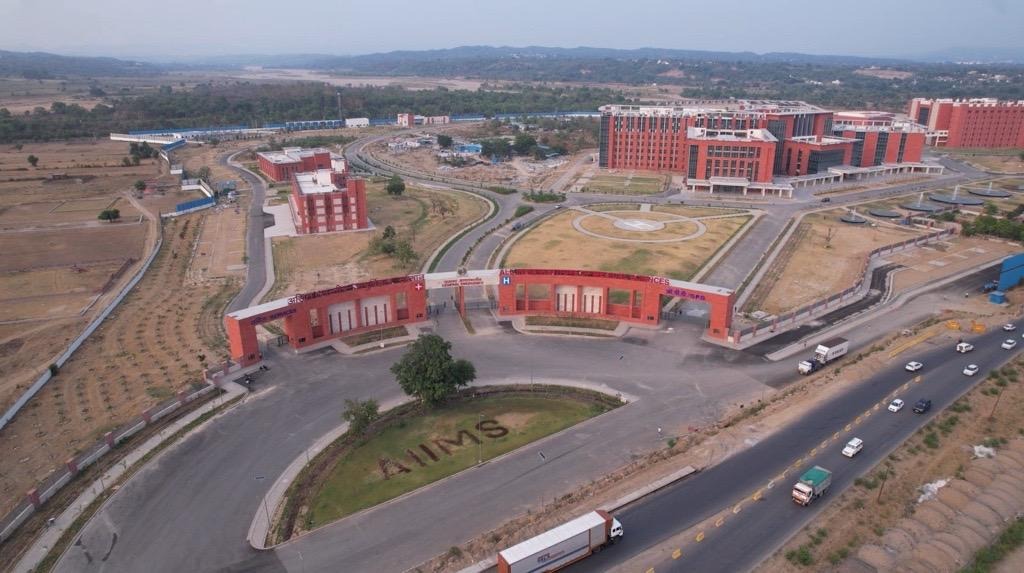
The divide in health and learning is just as clear. On the Indian side, an All India Institute of Medical Sciences now stands in Jammu, alongside new medical colleges, and the reach of national health insurance schemes has widened access to treatment that once required a long and costly journey out of the region. Institutions of national standing, a campus each of the Indian Institute of Technology and the Indian Institute of Management, have given the young a reason to stay rather than leave. Across the line, healthcare and education are, by the account of the territory's own residents and campaigners, chronically starved of investment, with families bearing the cost of illness out of their own pockets and a school system that has drifted far behind.
The Voice and the Silence
Perhaps the sharpest divergence is in the space allowed for ordinary civic life. On the Indian side, the machinery of grassroots democracy has been switched back on. Village councils, District Development Councils and, in 2024, the Assembly have given people elected representatives of their own choosing, and brought a new generation, many of them women, into the business of local governance. It is an imperfect and still-maturing process, but it is a real one.
On the other side, the texture of civic life is defined by its constraints. The territory's residents complain, through their own associations, of an assembly in which seats are reserved for categories they cannot themselves elect, and of decisive powers that rest not with any local body but with authorities in Islamabad. When they have gathered to press economic demands, they have met communication shutdowns and the banning of their own civil society coalitions. India's Ministry of External Affairs, observing the elections held there, called them a cosmetic exercise that masked an illegal occupation. The right to assemble, to speak and to choose, so visibly being exercised on one side of the line, is precisely what is being denied on the other.
The Meaning of the Divide
It would be easy to reduce all this to a scoreboard, but the deeper point is human. A border in Jammu and Kashmir did not merely separate two administrations. It set two populations, alike in every natural respect, on two different paths through the modern world. One has been given a railway, hospitals, universities, power lines and a ballot, with its troubles openly acknowledged and its future still being built. The other has been left with the hydroelectric potential of its rivers and little of their light, with proposals for progress that were drawn up and shelved, and with protests answered by force.
The people on the far side of the line understand this better than anyone, which is why their own slogans now speak the language of rights and resources rather than the language their rulers would prefer. A mountain range that once held a single shared world now holds two. The measure of the difference is not in the maps. It is in the daily lives of those who wake on each side of the line, and in the futures that are open, or closed, to their children. That is the truest reckoning of what a line through the Himalayas has come to mean.