The youth-led Cockroach Janta Party (CJP) has faced its first internal split, with rebel leader Manish Brahmbhatt forming CJP-Democratic after accusing the existing leadership of marginalizing volunteers and allowing alleged influence from the AAP. The dispute highlights broader challenges in unifying youth movements despite political differences.
New Delhi/ Bhopal September 4, 2026
In a major setback to the Cockroach Janta Party, the youth-led movement has suffered its first organisational split within months of its emergence. Activist Manish Brahmbhatt has launched CJP-Democratic, accusing the existing leadership of sidelining grassroots workers and allowing alleged AAP influence over the organisation.
Brahmbhatt announced the breakaway platform in New Delhi on Thursday. He alleged that the movement had been “politicised” after gaining national attention and was now controlled by a small group close to AAP convener Arvind Kejriwal. The allegations have not been independently established. Neither Kejriwal nor the AAP had responded to them at the time of filing this report.
The split has exposed differences within a movement built around students, examination paper leaks and unemployment. It has also raised questions about CJP’s future direction.
Brahmbhatt alleged that many volunteers were excluded when CJP formed its national leadership. He claimed that founder Abhijeet Dipke and 11 others constituted a 12-member team without consulting state coordinators and protesters. Nearly 450 coordinators associated with the Jantar Mantar agitation were denied representation, he claimed. Brahmbhatt also alleged that eight members of the team had links with the AAP.
He questioned why people associated with one political party had allegedly received greater representation. According to him, volunteers from different political backgrounds had joined the movement over common youth concerns. Brahmbhatt also raised questions over the representation of women, students and different communities. He said the leadership should reflect the diverse groups that had supported the campaign.
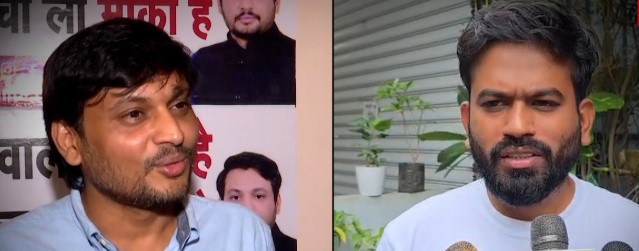
The differences had been growing for nearly a month. Brahmbhatt and fellow activist Rahul had earlier staged a hunger strike outside Dipke’s residence in Chhatrapati Sambhajinagar, demanding wider representation for grassroots workers. Reports said they were hospitalised after their health deteriorated.
With their demands remaining unresolved, Brahmbhatt has now formed a separate platform. He said CJP-Democratic would choose its national team through consultation and give volunteers a role in decision-making. The new group has invited people to join through social media, WhatsApp and a missed-call facility. Its complete leadership structure and future programme are yet to be announced.
CJP began as a satirical online platform before growing into a youth movement. Its name emerged from anger over a controversial reference to unemployed young people as “cockroaches.” The movement turned the expression into a symbol of survival and protest.
Its online campaign soon moved to the streets. CJP raised issues related to examination irregularities, alleged paper leaks, unemployment and the condition of government education. Its agitation at Jantar Mantar brought the organisation and Dipke into national focus.
Dipke has maintained that CJP will continue to function as a public pressure group, focusing largely on students, education and accountability. He has also rejected allegations that the organisation is working as the “B team” of either the Congress or the AAP. “Maharashtra Chief Minister says that I am B team of Congress, and some say that I am B team of Aam Aadmi Party. I feel all these people should sit together and decide whose B team I am. According to us, we are students’ A team,” Dipke said while responding to the political allegations. He described CJP as the “A team of students” and said its focus would remain on education and public accountability. His remarks amounted to a broader rejection of alleged political links, though CJP has not yet issued a detailed response to all the claims made by Brahmbhatt.
The dispute now goes beyond the selection of a core committee. It is about who controls a movement built largely through social media and how its online popularity should be converted into a national organisation.
CJP’s rapid rise had brought together supporters with different political leanings. This broad base helped the movement grow quickly, but it also created the difficult task of accommodating competing voices within a formal structure.
By adding “Democratic” to its name, the rebel faction has sought to make internal democracy its main political message. Brahmbhatt is presenting the new group as a platform for volunteers who believe they were left behind after the movement became successful.
It is still unclear how many CJP volunteers and state coordinators have joined the breakaway group. CJP-D has also not released any independently verifiable membership figures or a complete list of office-bearers. The future of CJP-Democratic will depend on the support it receives from grassroots workers. The original CJP, meanwhile, faces the challenge of addressing the internal differences while retaining the student-driven character behind its rapid rise.