Special Intensive Revision (SIR) exposes Election Commission (EC) debates: Commissioners record 14+ objections over voter rolls, software changes. Over 13.37 crore names excluded in draft rolls. Legal challenges—Opposition parties, ex-CEC O.P. Rawat highlight procedural flaws, Supreme Court hears petition on CEC's SIR legitimacy. New special enrolment drives sought for left-out voters.
New Delhi/Bhopal, October 2, 2026
The Special Intensive Revision (SIR) of electoral rolls has moved beyond a voter-list exercise into a wider debate over procedure, legality and the functioning of the Election Commission of India. The controversy intensified after an Indian Express investigation reported that Election Commissioners Sukhbir Singh Sandhu and Vivek Joshi had recorded objections at least 14 times over 10 months. The issues included changes to voter registration procedures, deletion and restoration of names and control over electoral-roll software.
The Election Commission has rejected suggestions that the reported differences undermine its decisions. It said operational queries, inputs and suggestions raised during the process were part of the normal functioning of the Commission and related to draft stages. It maintained that major decisions, including the nationwide SIR, were taken unanimously by the full Commission.
The Commission has since taken up several issues that figured in the internal correspondence. These include voter registration forms, access to electoral-roll databases and oversight of its IT systems. It has also decided that agendas for Commission meetings will be circulated in advance and minutes issued.
The scale of the revision has added to the debate. The SIR began in Bihar in June 2025 and was later expanded across the country. Election Commission data showed that more than 13.37 crore names were left out of draft electoral rolls across 30 States and Union Territories. This amounted to about 14.1 per cent of the pre-SIR electorate covered by those rolls.
But exclusion from a draft roll does not automatically mean permanent deletion or loss of voting rights. The revision process provides opportunities for eligible voters to seek inclusion through claims and objections and the continuous updation process.
In a fresh development, the Election Commission has now directed the 20 States and Union Territories where SIR has been completed to undertake a special drive for voters left out of the rolls. The drive will also cover young and first-time voters. Chief Electoral Officers, District Election Officers and Electoral Registration Officers have been asked to facilitate their enrolment. Those left out can apply to the concerned Electoral Registration Officer for inclusion. The Commission has said the regular Form 6 prescribed under the Registration of Electors Rules, 1960, can be used during the continuous updation process.
Congress and other Opposition parties have meanwhile used the reported internal objections to renew their criticism of the SIR and Chief Election Commissioner Gyanesh Kumar. They have raised questions over voter deletions and the decision-making process within the three-member Commission. The BJP has rejected the allegations and maintained that internal discussions show Commissioners are free to express their views.
The legal debate has also reached the Supreme Court. The court this week agreed to hear a petition questioning the functioning of the CEC and seeking to challenge the legality of the nationwide SIR. The petition relies partly on reports about objections within the Commission. The matter is expected to be taken up soon.
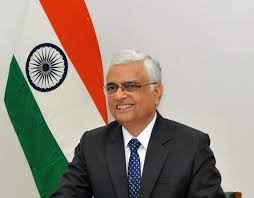
Former Chief Election Commissioner O.P. Rawat, a former Madhya Pradesh cadre IAS officer who served as CEC in 2018, has raised strong concerns over the reported procedural issues. Rawat said decisions of the three-member Commission have to emerge through consensus or, where members disagree, through the majority. He particularly questioned the reported alteration of Form 6 and argued that the statutory voter-registration form could not simply be changed through Election Commission instructions.
Rawat also raised concerns over changes in the electoral roll software. He said the new system reportedly restricted Electoral Registration Officers from restoring names deleted from the rolls, even though they have statutory powers to do so. He stressed that technology should support election officials and not limit powers given to them under the law. Rawat said the three Commissioners should discuss these concerns together, clarify the position and place the facts before the public.
Former CEC S.Y. Quraishi has also questioned the reported changes to Form 6 and the procedure followed for introducing additional requirements. Former Election Commissioner Ashok Lavasa has similarly sought clarity over whether changes to the form followed the procedure prescribed under the Registration of Electors Rules, 1960.
The controversy now centres on two issues. One is the accuracy of the electoral rolls and the inclusion of every eligible voter. The other is the process through which decisions were taken inside the Election Commission.
The ECI maintains that its final decisions on the SIR were unanimous and legally valid. Its latest special enrolment drive will now provide another opportunity for eligible voters left out of the rolls to get their names included, even as the wider procedural and legal questions remain under public and judicial scrutiny.