India’s cheetah reintroduction programme in Madhya Pradesh has expanded to a third location with the release of two cheetahs—Tholo (male) and CCB-3 (female)—at the Veerangana Durgavati Tiger Reserve (Nauradehi). This follows India’s first recorded cheetah births in 2025 (5 cubs), boosting the population to 60, including those bred locally. The reserve, a historic site without cheetahs for 115 years, features predator-proof enclosures for a soft-release program. While Kuno remains the main center, this marks Madhya Pradesh’s third cheetah home after Gandhi Sagar, expanding efforts across Bundelkhand.
Sagar/Bhopal, October 7
India’s cheetah reintroduction programme expanded to a third habitat in Madhya Pradesh on Wednesday, with two cheetahs from Kuno National Park released at the Veerangana Durgavati Tiger Reserve, earlier known as Nauradehi Wildlife Sanctuary.
Chief Minister Dr Mohan Yadav released male cheetah Tholo and female CCB-3 into specially prepared enclosures at the reserve in the Sagar region. After Kuno and Gandhi Sagar, Veerangana Durgavati has now become Madhya Pradesh’s third home for cheetahs.
Referring to the long absence of the animal from the region, the Chief Minister said the last cheetah in Madhya Pradesh had been seen around 110-115 years ago. He recalled that Project Cheetah began in the state in 2022 and said that despite the initial challenges, the population in India had now reached 60, following the recent birth of five cubs.
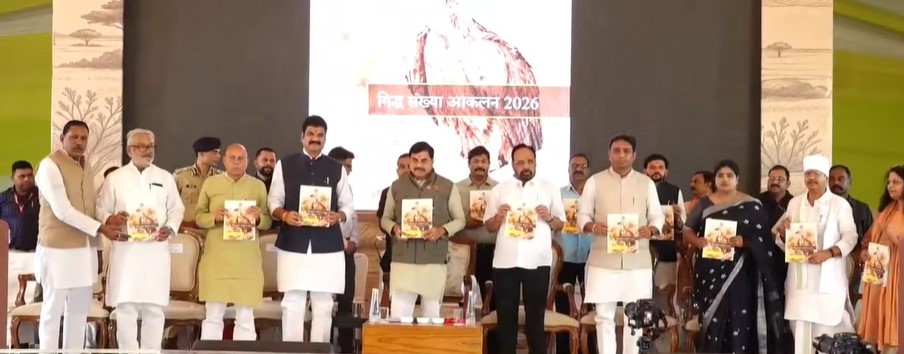
Dr Yadav said Madhya Pradesh was providing a suitable environment for wildlife and linked conservation with human development. “Our resolve is that forests should remain thriving and human life should also progress,” he said, describing it as the essence of “live and let live”. Minister Govind Singh Rajput, former minister and Rehli MLA Gopal Bhargava, senior forest officials and Head of Forest Force Shubh Ranjan Sen and PCCF (Wildlife) and Chief Wildlife Warden Dr Sameeta Rajoura were present on this occasion.
According to official account around 439 hectares have been developed as a soft-release area. It has five enclosures, or bomas, along with arrangements for monitoring and quarantine. The animals will remain under close watch as they adjust to their new surroundings. The bomas have predator-proof fencing about 10 feet high. Heavy galvanised mesh, electrified pulse wires and a reinforced base are designed to prevent other predators and burrowing animals from entering the enclosure.
Prime Minister Narendra Modi released eight cheetahs brought from Namibia at Kuno National Park in Sheopur on September 17, 2022. The species had been declared extinct in India in 1952. Twelve more cheetahs arrived from South Africa in 2023.
Kuno remained the centre of the programme during its early years. It was there that wildlife teams dealt with the first challenges of adapting African cheetahs to Indian conditions. It also became the main breeding centre as cubs began to arrive.
The project moved beyond Kuno in April 2025 when Gandhi Sagar Wildlife Sanctuary in western Madhya Pradesh became the second cheetah habitat. Veerangana Durgavati has now taken the programme into the Bundelkhand region.
Spread over about 2,339 square kilometres across Sagar, Damoh and Narsinghpur districts, Veerangana Durgavati is Madhya Pradesh’s largest tiger reserve. The present reserve was created by bringing together the Nauradehi and Veerangana Durgavati sanctuary landscapes. Its open forests and grasslands provide space for cheetahs, while herbivores form the natural prey base. The landscape also supports tigers, leopards and other carnivores, making monitoring of the newly introduced animals particularly important.
Wednesday’s release comes just two days after another significant development at Kuno. On October 5, India-born female KJP21 gave birth to five healthy cubs, taking India's cheetah population to 60, including 41 born in the country. KJP21, at 32 months, became the third India-born female cheetah to reproduce.The births mark a change in the cheetah programme. It is no longer only about animals brought from Africa adapting to Indian conditions. Cheetahs born in India are now growing up and producing another generation. That growing population has also increased the need for additional habitats rather than keeping the animals concentrated at Kuno.
Kuno remains the main centre of Project Cheetah, while Gandhi Sagar became its second home last year. With Wednesday’s release at Veerangana Durgavati Tiger Reserve, the programme has now expanded to a third location in Madhya Pradesh.
Tholo and CCB-3 will initially remain under close observation at Nauradehi. Wildlife teams will monitor their health, movement and adaptation to the new habitat following their shift from Kuno.