India marked Krishna Janmashtami 2026 with spiritual grandeur, uniting devotees in Mathura, Vrindavan, Dwarka, and Puri to celebrate his birth, childlike charm, and divine teachings. Temples worldwide—from Mathura’s prison-cell origins to Puri’s Jagannath traditions—echoed in devotional rituals, mangalasutradharan, and bhajans. From Vasudeva’s stormy escape via Yamuna to Krishna’s royal governance in Dwarka, the celebration weaved his life’s legend into midnight rituals, symbolizing unity in his multifaceted form (child, warrior, teacher, king).
Mathura/ Bhopal, September 4, 2026
Amid a spiritually charged atmosphere, India celebrated Krishna Janmashtami on Friday, with temples across the country echoing with bells, conch shells and devotional bhajans marking the birth of Lord Krishna.
The celebrations began with Mangala Aarti at major temples early in the morning. Many devotees remained on a day-long fast. Homes were decorated with flowers, tiny footprints of Bal Gopal and beautifully prepared jhulas.
The festivities will reach their most sacred moment at midnight, when Krishna is believed to have been born. The idols of Bal Gopal will be bathed in panchamrit, dressed in new clothes and placed in decorated cradles. Makhan-mishri, panjiri, fruits and other traditional bhog will then be offered.
Mathura remained the spiritual heart of the celebrations. It is here that Krishna’s story begins-not in a palace, but inside a prison cell under the rule of the cruel King Kansa.
According to Hindu tradition, Krishna was born to Devaki and Vasudeva. A divine prophecy had warned Kansa that Devaki’s eighth child would bring an end to his rule. Driven by fear, he imprisoned the couple and killed their children one after another.
Krishna was born on a dark and stormy night. The prison doors are believed to have opened on their own and the guards fell asleep. Vasudeva placed the newborn in a basket and quietly left for Gokul.
That journey gave the Yamuna an eternal place in Krishna’s story. The river was in spate when Vasudeva stepped into it with the child held above his head. Tradition says the waters rose to touch Krishna’s feet before making way for them. Sheshnag spread his hood over the newborn to protect him from the rain.
The same Yamuna later became a silent companion to Krishna’s childhood. Its banks saw him grazing cattle, playing the flute and sharing moments of laughter with his friends. It was also here that Krishna is believed to have subdued the poisonous serpent Kaliya. His victory freed the river and the people living along its banks from fear.
For devotees, therefore, the Yamuna is more than a river passing through Mathura and Vrindavan. It carries the memories of Krishna’s arrival, his childhood and his divine leelas. On Janmashtami, the ghats glow with lamps and prayers. Every diya floating on the water appears to carry a devotee’s faith towards the land where Kanha once played.
If Mathura remembers Krishna’s birth, Vrindavan celebrates his childhood. Here, he is the playful Kanha who stole butter, teased the gopis and wandered through the forests with his friends. The sound of his flute remains the most tender image of this phase of his life.
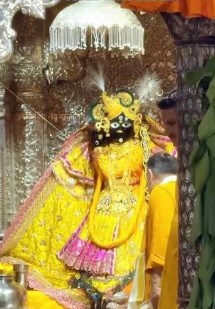
The lanes of Vrindavan were filled with chants of “Radhe Radhe” and “Jai Shri Krishna.” Temples were decorated with flowers and lights. Tableaux presented scenes from Krishna’s birth and childhood, while bhajans and Ras Leela performances kept the devotional mood alive.
The rare Mangala Aarti at the Banke Bihari Temple remains a special part of Janmashtami. Unlike most temples, the ritual is not performed there every morning. Devotees believe Banke Bihari is their beloved child and should not be awakened early each day.
At Shri Krishna Janmabhoomi in Mathura, Uttar Pradesh Chief Minister Yogi Adityanath performed Gau Pujan and offered prayers. He joined devotees in celebrating Krishna’s life and message. The Chief Minister also greeted the people on Janmashtami. His engagements included devotional programmes in Mathura, Lucknow and Gorakhpur.
Krishna’s journey, however, did not remain confined to Braj. It moved from the carefree lanes of Vrindavan to the responsibilities of kingship in Dwarka.
According to tradition, Krishna left Mathura to protect its people from repeated attacks. He established Dwarka on India’s western coast and became Dwarkadhish-the ruler of Dwarka. The transformation is remarkable. The cowherd of Gokul became a king and statesman. Yet his concern for people and dharma remained unchanged.
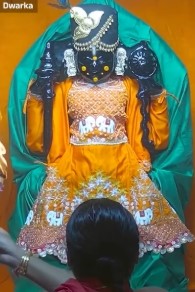
Dwarka represents the mature phase of Krishna’s life. Here, he handled the responsibilities of governance, built alliances and tried to prevent conflict. He stood with those he believed were on the path of dharma. At the Dwarkadhish Temple in Gujarat, Janmashtami began with Mangala Aarti, special darshan and traditional kirtans. The deity was given a royal shringar befitting Dwarkadhish. The celebrations will reach their peak with the midnight Janmotsav Aarti. Chants of “Jai Kanhaiya Lal Ki” will welcome the divine child in the very city where he is worshipped as king.
Madhya Pradesh Chief Minister Dr Mohan Yadav, accompanied by his wife, offered prayers at the Dwarkadhish Temple on the eve of Janmashtami. He prayed for the happiness, prosperity and well-being of the people. Dr Yadav described his visit ahead of the festival as a matter of good fortune. He recalled that Dwarka is one of the principal Char Dham pilgrimage centres and is also associated with one of the four Peethas established by Adi Shankaracharya. He extended Janmashtami greetings to the people of Gujarat, Madhya Pradesh and the country. Cultural and devotional programmes were also organised across Madhya Pradesh to take Krishna’s life and teachings to the people.
Between Vrindavan and Dwarka stands Kurukshetra-the place where Krishna’s message assumed universal meaning.
On the battlefield, Krishna became Arjuna’s charioteer, friend and guide. Arjuna was his most trusted companion and disciple. Yet, when he saw his teachers, relatives and friends standing in the opposing army, he was overcome by grief. He lowered his bow and refused to fight.
Krishna’s reply became the Bhagavad Gita.
He helped Arjuna see the difference between personal attachment and larger duty. He taught him to act with courage, but without selfish desire. A person must perform his duty without being controlled by the result, Krishna said.
The message of nishkama karma, or selfless action, continues to guide people facing difficult choices. The Gita does not ask anyone to act without thought. It calls upon people to overcome fear, understand their responsibility and act with a steady mind.
Prime Minister Narendra Modi recalled the same message while greeting the nation. He said Krishna’s divine teachings carried a profound inspiration for selfless action and had continued to guide humanity. Prime Minister Narendra Modi wished that Janmashtami would bring positive energy and strength into everyone’s life. He concluded his message with “Jai Shri Krishna.”
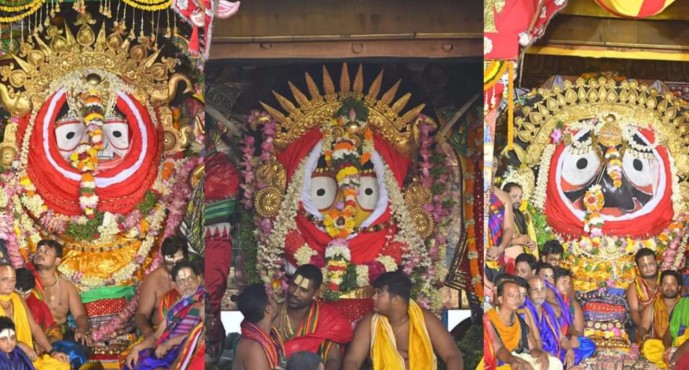
Far from Mathura and Dwarka, Puri carries another deeply rooted Krishna tradition.
Lord Jagannath is widely worshipped as a form of Vishnu and Krishna. At the Jagannath Temple, he is seated with his elder brother Balabhadra and sister Subhadra. Their presence together gives the Puri tradition its warmth and distinct identity. Krishna does not stand alone on the altar. He is with his brother and sister, reminding devotees of the place of family in his life.
Janmashtami at the Jagannath Temple follows its own ancient rituals. Special observances include Jeuda Bhog and Garbha Udaka Bandapana. These ceremonies symbolically prepare for the divine birth and reflect Puri’s unique way of retelling Krishna’s story.
Krishna assumes a different form at every sacred place. Mathura remembers the child born against tyranny. Vrindavan celebrates his love, flute and innocent mischief. Kurukshetra listens to the teacher of the Gita. Dwarka bows before its king, while Puri worships Jagannath with Balabhadra and Subhadra.
Yet all these forms carry one message. Krishna belongs equally to the child, the friend, the seeker, the warrior and the ruler. At midnight, temple bells and conch shells will mark the birth of Bal Gopal. As devotees gently rock his cradle, the story of Vasudeva carrying newborn Krishna across the Yamuna on a stormy night will come alive once again.