Rajasthan is set to increase crude oil production from 51,000–52,000 barrels/day to 80,000 barrels/day using advanced recovery methods like alkali-surfactant-polymer and cyclic steam stimulation. This targets stronger energy security amid West Asia tensions, diversifying India’s supply sources beyond imports, with a focus on refining and pipeline infrastructure.
Jaipur/ Bhopal, September 8, 2026
With the West Asia crisis continuing and no immediate breakthrough in sight, India is widening its search for reliable energy supplies. The country is exploring alternative overseas sources while also accelerating domestic oil production, exploration and refining.
A positive development has now come from Rajasthan. The state plans to raise crude oil production from the present 51,000–52,000 barrels per day to 80,000 barrels in phases, according to reports.
The plan comes at a crucial time. Continuing tensions in West Asia have disrupted shipping movement through important sea routes and kept global crude prices volatile. Any prolonged disturbance could increase India’s import bill and put pressure on fuel prices.
India depends heavily on imported crude to meet its growing energy needs. Higher domestic production cannot replace these imports immediately, but it can provide an important cushion during overseas supply disruptions.
Reports said Rajasthan will use advanced oil recovery technologies to extract more crude from existing fields. These techniques can recover oil that remains trapped in mature and difficult reservoirs.
According to reports, Additional Chief Secretary of the Rajasthan Mines and Petroleum Department Aparna Arora said the state would achieve the target in a phased manner. The strategy will focus on improving recovery from existing oilfields while continuing exploration in other potential areas. Alkali-Surfactant-Polymer technology will be used in the Barmer-Sanchore and Jaisalmer basins. The process involves injecting a chemical mixture into reservoirs to release crude that cannot be recovered through conventional methods.
Cyclic Steam Stimulation will be used in the Bikaner-Nagaur basin. It uses steam to heat heavy and highly viscous crude, making it easier to bring to the surface. Technical assessment and reservoir modelling are expected to be carried out before the technologies are deployed on a wider scale.
Rajasthan has emerged as one of India’s most important onshore hydrocarbon regions. The Mangala, Bhagyam and Aishwariya fields in the Barmer basin have made a major contribution to domestic crude production. Commercial crude production from the Mangala field began in August 2009. Production later expanded to several other fields in the Barmer-Sanchore basin. Output from oilfields generally falls as they mature. Rajasthan’s plan is therefore aimed at improving their recovery rate and extending their productive life through modern technology.
The state currently has 12 petroleum mining leases and 12 petroleum exploration licences. Cairn Oil and Gas, Oil India Limited, ONGC and Focus Energy are among the companies engaged in crude oil and natural gas production and exploration.
Natural gas production in Rajasthan stands at around 2.6 to 2.8 million metric standard cubic metres per day. The state ranks second in onshore natural gas production and third in crude oil production among Indian states, according to reports.
The production target is also linked to the nine-million-tonne-per-year HPCL Rajasthan Refinery at Pachpadra in Balotra district. The refinery-cum-petrochemical complex has been established by HPCL Rajasthan Refinery Limited, a joint venture between HPCL and the Rajasthan government.
HPCL holds a 74 per cent stake in the project, while the state government holds the remaining 26 per cent. The refinery is designed to process 1.5 million tonnes of Rajasthan crude and 7.5 million tonnes of imported crude annually. It can process up to 2.5 million tonnes of local crude if sufficient supplies become available.
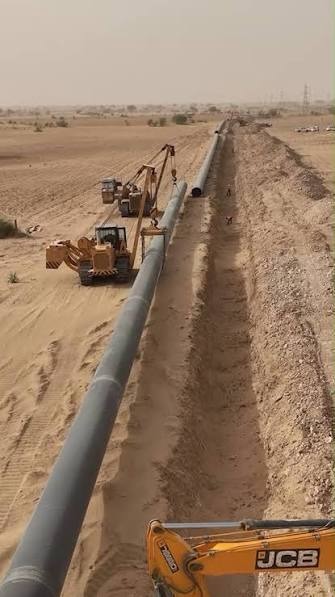
A dedicated 74-km pipeline connecting the Mangala oilfield with Pachpadra has also been commissioned. It can carry 1.5 million tonnes of Rajasthan crude annually to the refinery.
India is simultaneously diversifying its overseas purchases. Recent procurement of West African crude for Indian refineries, including the Rajasthan facility, points to an effort to reduce exposure to any one supply region.
The proposed increase of nearly 28,000 barrels per day will remain small compared with India’s total requirement. Yet every additional barrel produced at home will reduce pressure on imports and strengthen the country’s ability to respond to global shocks.
The Thar Desert has already secured an important place on India’s energy map. Higher production, modern recovery technology and local refining capacity can now help Rajasthan play a larger role in the country’s long-term energy security.