Madhya Pradesh marks 70 years since its 1956 formation, highlighting economic growth, cultural heritage, spiritual landmarks and future priorities.
Bhopal, November 1, 2026
Madhya Pradesh celebrated its 71st Foundation Day on Sunday, completing 70 years since its formation on November 1, 1956. Chief Minister Dr Mohan Yadav led the morning celebrations in Bhopal, marking the occasion with a message of unity, development and national pride.
Prime Minister Narendra Modi extended his greetings to the people of Madhya Pradesh, highlighting the state's glorious heritage, rich culture and natural beauty.
Popularly known as the Heart of India, Madhya Pradesh has developed a distinct identity through its diverse traditions, languages and communities. From the historic cities of Malwa and Bundelkhand to the tribal regions of Mahakoshal and Baghelkhand, the state reflects a remarkable blend of cultures.
Chief Minister Dr Mohan Yadav began the Foundation Day celebrations by planting an Arjun sapling under the Sankalp Vriksha campaign at Shaurya Smarak in Bhopal. He also visited an exhibition showcasing the Indian Army's courage, military capabilities and technological advancements.
Soil collected from villages, towns and cities across all 55 districts of Madhya Pradesh was brought to the venue and used during the plantation ceremony. Dr Yadav said the initiative symbolised the state's unity despite its diversity of languages, cultures and traditions. He recalled that 2026 was being observed as Kisan Kalyan Varsh, while 2027 would be dedicated to youth development. Foundation Day programmes were also scheduled across the state, with ministers assigned to attend district-level celebrations.
Madhya Pradesh's economic journey has gathered momentum over recent decades, with agriculture, industry, infrastructure and services contributing to the state's expanding economy. According to the Madhya Pradesh Economic Survey 2025–26, presented in the State Assembly in February, per capita net income at current prices increased from Rs 38,497 in 2011–12 to an estimated Rs 1,69,050 in 2025–26. This represents an increase of nearly 4.4 times in about 14 years. Even after adjusting for inflation, per capita income has almost doubled, rising from Rs 38,497 to Rs 76,971 at constant 2011–12 prices.
The state's Gross State Domestic Product (GSDP) at current prices is estimated at Rs 16,69,750 crore in 2025–26, compared with Rs 15,02,428 crore in the previous financial year. The Economic Survey estimates nominal GSDP growth at 11.14 per cent, while real growth, adjusted for inflation, stands at 8.04 per cent.
The expansion is also reflected in government expenditure. The state's budgeted expenditure, excluding debt repayment, increased substantially over the years, reaching approximately Rs 3.75 lakh crore in 2025–26.
Agriculture continues to play an important role in the state's economy, while manufacturing, construction, trade, tourism and other services have contributed to its growth. Madhya Pradesh has also strengthened its position in wildlife conservation, particularly tiger protection, earning recognition as India's Tiger State. Women-focused welfare schemes, irrigation projects, improved road connectivity and industrial investment have remained important areas of government policy. As Madhya Pradesh completes 70 years, the state is placing greater emphasis on industrial expansion, employment generation, agricultural prosperity and infrastructure development.
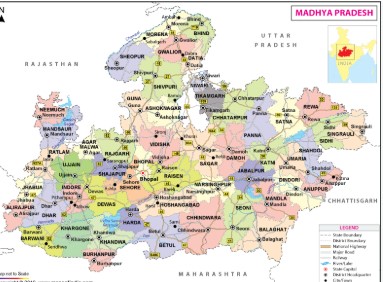
The Madhya Pradesh we know today did not exist in its present form when India gained Independence in 1947. Much of the region was divided among princely states and administrative territories, each with its own history and system of governance. The present state took shape on November 1, 1956, when four administrative units were brought together under the States Reorganisation Act.
One of them was the old Madhya Pradesh, which had been formed from the former Central Provinces and Berar in 1950. Nagpur was its capital, and its territory included Mahakoshal, Chhattisgarh and Vidarbha.
The second was Madhya Bharat, formed in 1948 by bringing together several princely states, including territories ruled by the Scindia family of Gwalior and the Holkars of Indore. Gwalior and Indore served as its administrative centres.
The third was Vindhya Pradesh, also formed in 1948 by merging princely states of Bundelkhand and Baghelkhand, with Rewa as its capital.
The fourth was Bhopal, which had been a princely state before Independence. It merged with India in 1949 and remained a separate state until 1956.
The major change came on November 1, 1956, when Madhya Bharat, Vindhya Pradesh and Bhopal were merged with the old Madhya Pradesh to create the reorganised state. At the same time, the Marathi-speaking Vidarbha region, including Nagpur, became part of Bombay State.
Bhopal was chosen as the capital of the new Madhya Pradesh. Pandit Ravishankar Shukla became its first Chief Minister and took oath at the historic Minto Hall in Bhopal on November 1, 1956. Thus, the Madhya Pradesh that emerged in 1956 brought together different regions, languages, cultures and historical traditions under one administration.
Madhya Pradesh underwent another major territorial change on November 1, 2000, when Chhattisgarh was carved out as a separate state.
Despite the division, Madhya Pradesh remains India's second-largest state by area. The state now has 55 districts, with Bhopal, Indore, Gwalior, Jabalpur and Ujjain among its major urban centres. Its political boundaries have changed over time, but the cultural traditions of Malwa, Bundelkhand, Baghelkhand, Mahakoshal and other regions continue to shape its identity.
Madhya Pradesh's identity is also deeply connected with India's religious and spiritual traditions. Its ancient cities, sacred rivers and temples have attracted pilgrims for centuries.
Ujjain holds a special place in Hindu traditions. According to religious accounts, Lord Krishna and Balarama received their education from Guru Sandipani in ancient Avantika, now known as Ujjain. The city is also home to the famous Mahakaleshwar Jyotirlinga and hosts the Simhastha Kumbh.
The state has another Jyotirlinga at Omkareshwar, situated on an island in the sacred Narmada River. Originating at Amarkantak, the Narmada remains closely associated with religious practices, including the traditional Narmada Parikrama.
Chitrakoot, on the Madhya Pradesh–Uttar Pradesh border, is associated with Lord Ram's forest exile and his meeting with Bharat. Orchha in Niwari district is known for its Ram Raja Temple, where Lord Ram is worshipped as a king.
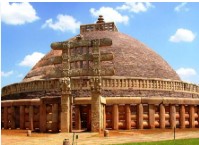
Maihar's Maa Sharda Devi Temple, the Buddhist monuments at Sanchi and the historic Jain temples of Khajuraho further reflect the state's diverse religious heritage.
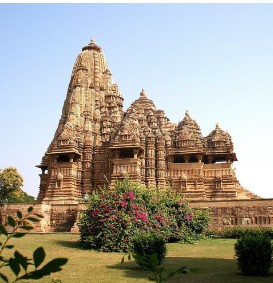
Madhya Pradesh's political boundaries have changed over the decades, but its cultural traditions have continued to bring together people from different regions and communities.
As the state completes 70 years of its formation, its journey from the integration of four administrative units in 1956 to a modern state of 55 districts reflects both its historical legacy and changing development priorities.