India and China, once historic economic powers, now face a complex relationship marked by strategic rivalry and differing worldviews, impacting their roles in Asia.
New Delhi/ Bhopal July 14, 2026
By Bipin Deo
For much of recorded history, India and China stood as the world's two great civilizational powers. Until the seventeenth century, they together accounted for nearly half of global economic output and shaped the world's philosophy, culture, literature, science, and commerce. Colonialism, imperialism, and foreign domination interrupted this trajectory, pushing both societies into prolonged periods of economic decline and political subjugation.
Today, history has turned another page. Both countries have re-emerged as major global powers, yet instead of translating their shared civilizational heritage into strategic cooperation, they remain locked in a complex relationship defined by competition, confrontation, and mistrust. More than seven decades of diplomatic engagement have produced only limited cooperation, while strategic rivalry has become the defining feature of bilateral relations.
The divergence stems not merely from conflicting national interests but from fundamentally different strategic worldviews. Since the Mao era, the Chinese Communist Party has consistently pursued the objective of establishing China as the pre-eminent power in Asia. The enduring influence of the "Middle Kingdom" mindset continues to shape Beijing's strategic thinking. India, in contrast, has consistently advocated a multipolar Asia where no single power dominates the continent.
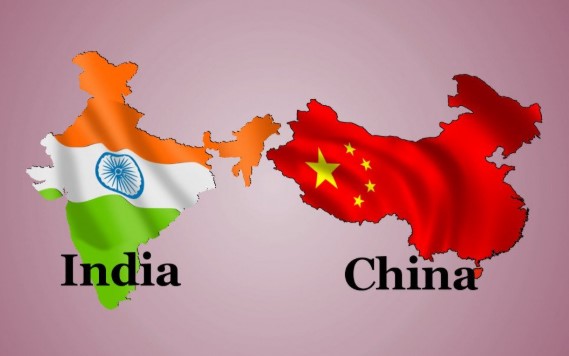
This difference is reinforced by contrasting political systems. In China, the Communist Party and the state are virtually inseparable, with state institutions serving the objectives of the Party. India, as a vibrant multiparty democracy, maintains a clear distinction between party and state. Chinese strategic thinking has traditionally emphasized coercive power, whereas India's foreign policy has been influenced by democratic values, moral legitimacy, and strategic autonomy. These contrasting philosophies inevitably shape each country's approach to international affairs.
China's Strategic Calculus
China's policy towards India is deeply influenced by New Delhi's relations with the United States. Beijing closely monitors India's growing strategic partnership with Washington and often responds by increasing military pressure along the disputed border whenever it perceives India moving closer to the United States.
However, military pressure represents only one dimension of China's strategy. Increasingly, Beijing has mastered the art of "grey-zone warfare"—employing economic, technological, and diplomatic instruments below the threshold of open conflict. Restrictions on exports of semiconductors, rare-earth materials, and pharmaceutical ingredients illustrate how China uses supply-chain dependencies to constrain India's economic rise.
India's emergence as the "pharmacy of the world" during the COVID-19 pandemic and its growing role in global manufacturing, particularly as a major production hub for Apple iPhones, underscore New Delhi's expanding economic capabilities. These developments inevitably challenge China's long-standing manufacturing dominance.
China also seeks to shape India's strategic environment by expanding its influence across South Asia and the Indian Ocean Region. By strengthening its presence in India's immediate neighbourhood, Beijing attempts to create a persistent sense of strategic pressure. The larger the economic gap between the two countries, the more assertive China's grey-zone tactics are likely to become.
Former Foreign Secretary Shyam Saran, in How China Sees India and the World, notes that the economies of India and China were comparable in size during the 1980s. Today, China's economy is approximately four to five times larger. Narrowing this economic gap remains India's foremost strategic challenge. Sustained high economic growth over the next two decades could significantly alter the balance of power in Asia.
India's Strategic Advantages
India possesses several structural strengths that position it as the most credible long-term counterweight to China.
Its demographic dividend, democratic political system, strategic location at the heart of the Indo-Pacific, close partnerships with advanced economies, and a globally successful diaspora collectively provide India with unique advantages that few countries possess.
China's grey-zone diplomacy also extends to repeated attempts to raise issues such as Arunachal Pradesh and other boundary disputes in order to generate periodic diplomatic crises. These tactics seek to keep India strategically preoccupied while reinforcing Beijing's territorial claims.
At the same time, India's growing strategic engagement in the Indo-Pacific reflects an increasingly confident foreign policy. The export of the BrahMos supersonic cruise missile to the Philippines represents a significant milestone in India's defence diplomacy. Countries such as Vietnam and Indonesia have similarly expanded defence and strategic cooperation with India as they seek to balance China's growing regional influence.
The Indo-Pacific has become the principal theatre of strategic competition. Many Asian nations have become increasingly uncertain about the long-term reliability of American security commitments. While countries such as Japan and South Korea possess formidable economic capabilities, their security architectures remain closely tied to the United States. India, by contrast, combines military autonomy with rapid economic growth and demographic strength, making it a uniquely independent strategic actor.
Understanding China's Evolving Strategy
Former Foreign Secretary Vijay Gokhale, in China's Wars, argues that following its 1979 conflict with Vietnam, China fundamentally altered its military approach. Rather than deploying large expeditionary forces abroad, Beijing has increasingly relied on economic influence, infrastructure investments, technological leverage, and political partnerships to expand its global influence.
The Chinese leadership frequently insists that it does not seek traditional superpower status. Becoming a superpower entails enormous financial and military commitments across the globe—burdens that China's slowing economy and ageing population increasingly constrain. Instead, Beijing seeks influence without assuming the full costs of global leadership.
China has also demonstrated remarkable strategic opportunism. The Russia-Ukraine war enabled Beijing to secure discounted Russian energy supplies, while any future reconstruction of Iran is likely to offer significant commercial opportunities for Chinese companies. Beijing has consistently shown its ability to derive economic advantages from geopolitical instability.
India's Expanding Diplomatic Footprint
Prime Minister Narendra Modi's outreach to countries across the Indo-Pacific reflects India's broader effort to strengthen strategic partnerships in the region. Deep civilizational links with Southeast Asia and the wider Indo-Pacific provide India with an important source of soft power, complementing its expanding economic and security engagement.
Equally significant is the role of the Indian diaspora, which has become one of the country's most valuable diplomatic assets. Indian communities across the world increasingly contribute to strengthening political, economic, and cultural ties between India and its strategic partners.
Towards an Asian Century
Ultimately, the future of Asia depends on how India and China manage their relationship. Singaporean scholar Kishore Mahbubani, in The Asian Century, argues that Asia can fully realise its potential only if its two largest civilizations move beyond confrontation towards constructive coexistence.
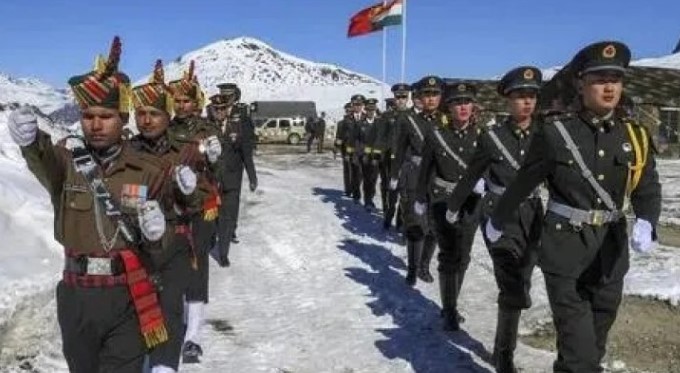
The principal obstacle remains the unresolved boundary dispute. China's acceptance of the McMahon Line in its negotiations with Bhutan contrasts sharply with its rejection of the same framework in its dispute with India. This inconsistency continues to complicate efforts to achieve a durable settlement.
The India-China relationship is likely to remain one of the defining geopolitical contests of the twenty-first century. Competition between the two countries is inevitable. The challenge for India is to ensure that this competition unfolds from a position of growing economic strength, strategic confidence, and diplomatic resilience. Sustained economic growth, technological self-reliance, military modernisation, and deeper engagement with the Indo-Pacific will determine India's ability to successfully navigate the China challenge in the decades ahead.
(The writers is a geopolitics expert based in Nepal)