US and Iran engage in crucial talks in Switzerland, focusing on a 14-point plan to address Middle East tensions, Iran's nuclear program, and regional security.
New Delhi/ Bhopal June 21, 2026
High-stakes talks between the United States and Iran got underway in Switzerland on Sunday. The negotiations are centred on a proposed 14-point framework aimed at easing tensions across the Middle East. The discussions at the Bürgenstock resort bring together US Vice President JD Vance and senior Iranian leaders led by Parliament Speaker Mohammad Bagher Ghalibaf and Foreign Minister Abbas Araghchi.
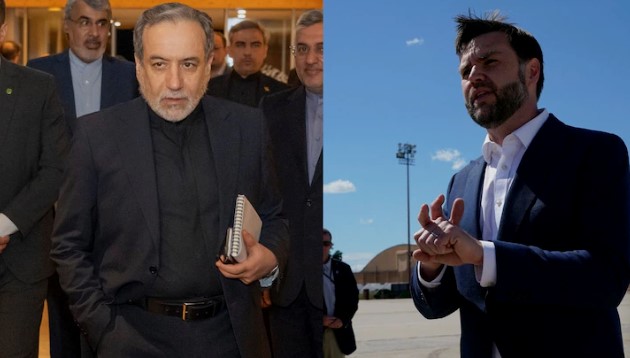
The Swiss talks mark the start of a crucial 60-day effort to convert last week's framework agreement into a detailed settlement covering Iran's nuclear programme, sanctions relief, release of frozen assets, regional security and Strait of Hormuz issues. The outcome carries major implications for global energy markets, particularly as the Strait of Hormuz handles nearly a fifth of the world's traded oil and natural gas. The talks are also taking place against the backdrop of continuing hostilities linked to Lebanon. The conflict has emerged as a major sticking point in the negotiations. Fighting between Israel and the Iranian-backed Hezbollah group in Lebanon has escalated since the framework was signed. Iran's subsequent decision to close the Strait of Hormuz has further raised the stakes and added urgency to the talks.
Qatar and Pakistan have both played a role in facilitating contacts between Washington and Tehran during months of back-channel diplomacy. Their efforts helped sustain communication between the two sides. They also helped lay the groundwork for the current round of negotiations.
As the peace process gathered momentum, Pakistan increasingly projected itself as an important facilitator and was widely seen as hoping to host a significant stage of the initiative. Diplomatic circles had speculated that the proposed framework could eventually be unveiled or formally signed in Islamabad.
However, the process took a different turn. According to diplomatic sources, the framework was digitally signed and exchanged through Qatar, with the Gulf nation gradually emerging as the principal intermediary during the final phase of preparations. The subsequent decision to hold the negotiations in Switzerland further reinforced that perception. While Pakistan remains associated with the mediation effort, the spotlight shifted elsewhere as Qatar took centre stage in the framework's rollout and Switzerland became the venue for the formal negotiations.
For now, the focus remains on whether the Swiss talks can overcome the major hurdles that still remain. Iran's repeated closure threats over the Strait of Hormuz and differences over the conflict in Lebanon continue to complicate the negotiations. A proposed 60-day roadmap is under discussion. The coming weeks are expected to determine whether the parties can move from a preliminary framework to a broader and more durable agreement.