Madhya Pradesh has launched a wild buffalo reintroduction program in Kanha Tiger Reserve, marking a significant step in regional biodiversity conservation.
Bhopal April 28, 2026. Madhya Pradesh chief minister Dr Mohan Yadav in a significant step toward strengthening biodiversity, released four wild buffaloes (three females and one male) into the Supkhar and Topla ranges of Kanha Tiger Reserve in Balaghat district on April 28. The release marks the formal launch of the state’s wild buffalo reintroduction programme, aimed at reviving a species that had disappeared from the region decades ago.The buffaloes were translocated from Kaziranga National Park under a mutual wildlife exchange programme between Madhya Pradesh and Assam. The initiative reflects growing inter-state cooperation in conservation efforts and biodiversity management.
On the occasion, Dr. Yadav expressed gratitude to Assam Chief Minister HimantaBiswaSarma for extending support to the programme. Speaking on the sidelines, he described the initiative as the beginning of a new chapter in relations between the two states, particularly in the field of wildlife conservation. He noted that Assam has assured continued cooperation, including the supply of additional wild buffaloes and rhinoceroses to Madhya Pradesh in the coming phases.
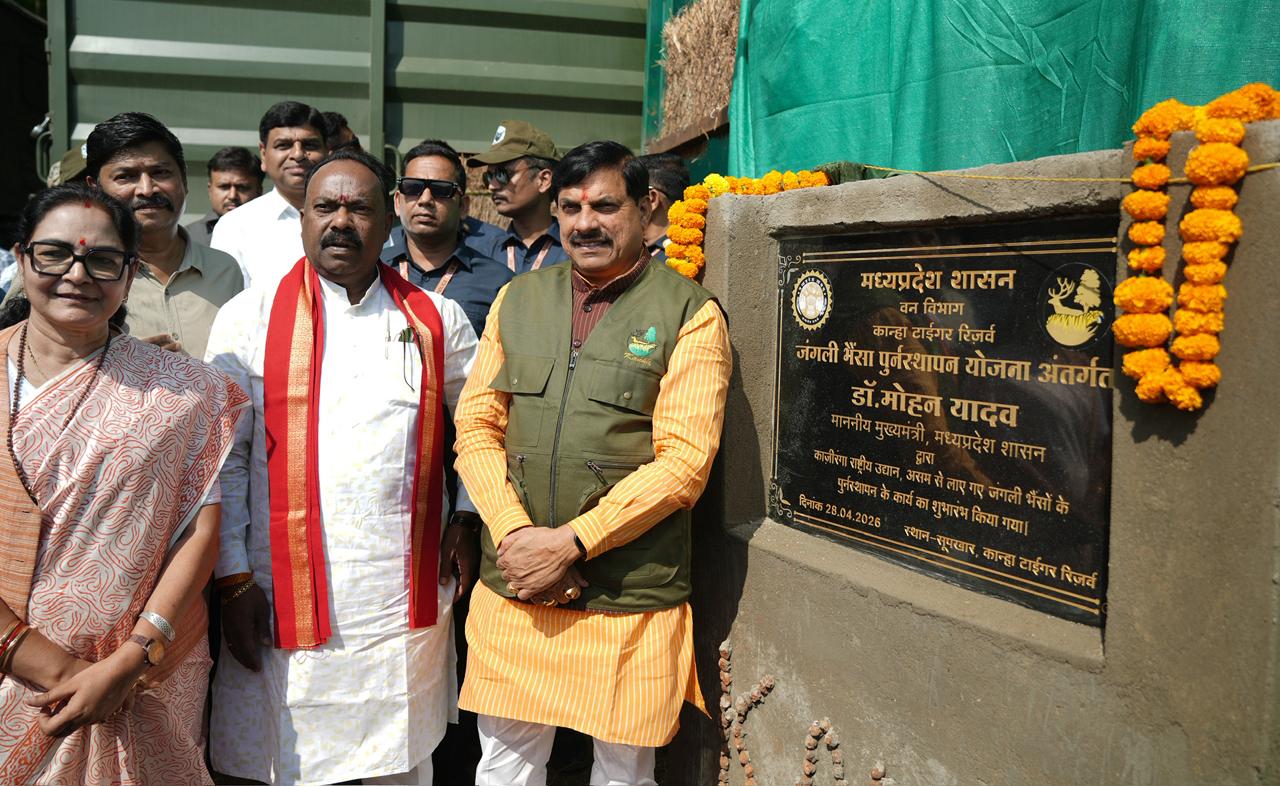
Highlighting the state’s growing stature in conservation, Dr. Yadav said Madhya Pradesh has emerged as a major centre for wildlife preservation, offering natural habitats for several endangered species. He credited the leadership of Prime Minister Narendra Modi and the efforts of wildlife experts for the success of the cheetah reintroduction project at Kuno National Park. According to him, the addition of wild buffaloes marks yet another milestone in expanding the state’s biodiversity base.The Chief Minister emphasized that the government is working toward introducing and conserving a wide range of wildlife species in the state. Already known as the “Cheetah State” and home to a rich population of leopards, crocodiles, and gharials, vulture etc, Madhya Pradesh is steadily reinforcing its ecological identity. He added that these initiatives are being undertaken with a long-term vision, ensuring that future generations benefit from a thriving and diverse natural heritage.
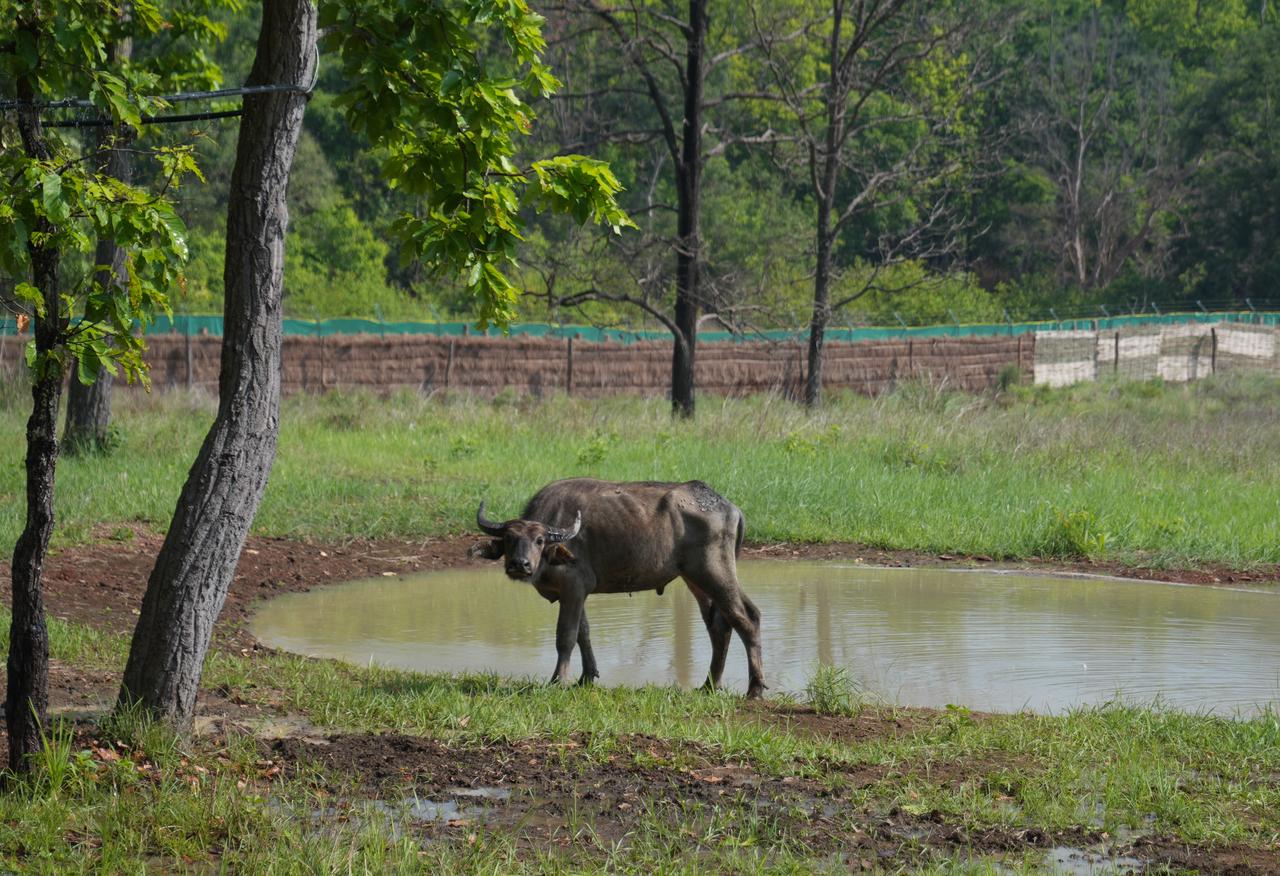
Looking ahead, Dr. Yadav pointed out that new conservation landscapes are being developed to accommodate more wildlife. After Kanha, projects at Gandhi Sagar and Nauradehi Wildlife Sanctuary in the Sagar region are taking shape as potential habitats for additional species. These efforts, he said, will further strengthen the state’s position as a leader in wildlife conservation in India.With the successful release of the first batch of four wild buffaloes, Madhya Pradesh has taken a decisive step toward restoring ecological balance while setting the stage for future conservation successes.According to estimates this ambitious conservation effort involves the translocation of wild buffaloes from Kaziranga National Park in Assam to Kanha in Madhya Pradesh. In the first phase, a group of four buffaloes has already begun its journey. The long-term goal is to establish a “founder population” of around 50 individuals to ensure genetic viability and population sustainability.During the current season, a total of eight buffaloes are scheduled to be relocated. The entire process is being carried out under strict scientific protocols, supervised by experienced veterinarians and senior forest officials from both Kaziranga and Kanha. This “wild-to-wild” translocation is particularly significant, as it involves moving animals directly from one natural habitat to another, minimizing human-induced behavioral changes.
MP–Assam Collaboration Opens New Chapter
The project also symbolizes a broader collaboration between Madhya Pradesh and Assam in wildlife conservation and biodiversity exchange. As part of this agreement, two pairs of rhinoceroses from Assam will be brought to Van Vihar National Park. In return, Madhya Pradesh will translocate three tigers and six crocodiles to Assam, based on the latter’s requirements.This mutual exchange was formalized during a meeting between Chief Minister Mohan Yadav and Assam Chief Minister HimantaBiswaSarma in Guwahati. The agreement marks a new phase of inter-state cooperation in wildlife conservation, reinforcing India’s commitment to preserving its rich natural heritage through collaborative strategies.
‘After Cheetahs, Now Buffalo’: Expanding Biodiversity Goals
Chief Minister Dr Mohan Yadav noted that after the successful reintroduction of cheetahs, the return of wild buffaloes will add another dimension to the state’s biodiversity. Madhya Pradesh, already known as the “Tiger State” and “Leopard State,” is now aiming to further strengthen its ecological identity.The wild buffalo reintroduction is not merely about reviving a species; it is about restoring ecological functions. Large herbivores like buffaloes play a crucial role in maintaining grassland ecosystems by regulating vegetation and supporting a wide range of other species.
Wild buffaloes disappeared from Madhya Pradesh nearly 100 years ago. The last recorded sighting in Kanha’sSupkhar region dates back to around 1979. Their decline was driven by excessive hunting, habitat degradation, human interference, and the destruction of grasslands.Today, their natural population is largely confined to Assam, with only a very small presence in Chhattisgarh. This makes the Kanha reintroduction not just important, but urgent, for the species’ long-term survival and expansion.
Kanha: The Ideal Habitat
According to studies conducted by the Wildlife Institute of India, Kanha Tiger Reserve offers one of the most suitable habitats for wild buffaloes. Its vast grasslands, abundant water sources, and relatively low human disturbance create ideal conditions for the species to thrive.With the release of wild buffaloes at Supkhar, the project enters a crucial implementation phase. Experts believe that the presence of these large grazers will rejuvenate Kanha’s grassland ecology and enhance overall biodiversity balance.This initiative, led by the Madhya Pradesh Forest Department under the leadership of Chief Minister Mohan Yadav, is being seen as a model conservation programme. If successful, it could pave the way for similar wildlife restoration efforts across India, reaffirming the country’s position as a global leader in biodiversity conservation.