L. Eswar Rao, an artisan from Jatni, crafts miniature chariots using areca nut leaves and neem wood for Rath Yatra, reflecting deep devotion and intricate craftsmanship.
Bhopal July 15, 2026
Every year, millions of devotees gather in Puri to witness the towering chariots of Lord Jagannath, Lord Balabhadra and Devi Subhadra roll along the Grand Road. This year, however, another Rath Yatra has quietly captured hearts-not because of its size, but because of the devotion that shaped it.
Barely five inches tall, these miniature chariots have been handcrafted by noted miniature artist L. Eswar Rao of Jatni near Bhubaneswar. Using delicate areca nut leaves (Supari), Rao spent seven days creating the tiny replicas, each carrying intricately carved neem-wood idols of the Holy Trinity measuring less than an inch in height. The craftsmanship reflects an enduring truth of the Jagannath tradition, devotion is measured not in scale, but in sincerity.
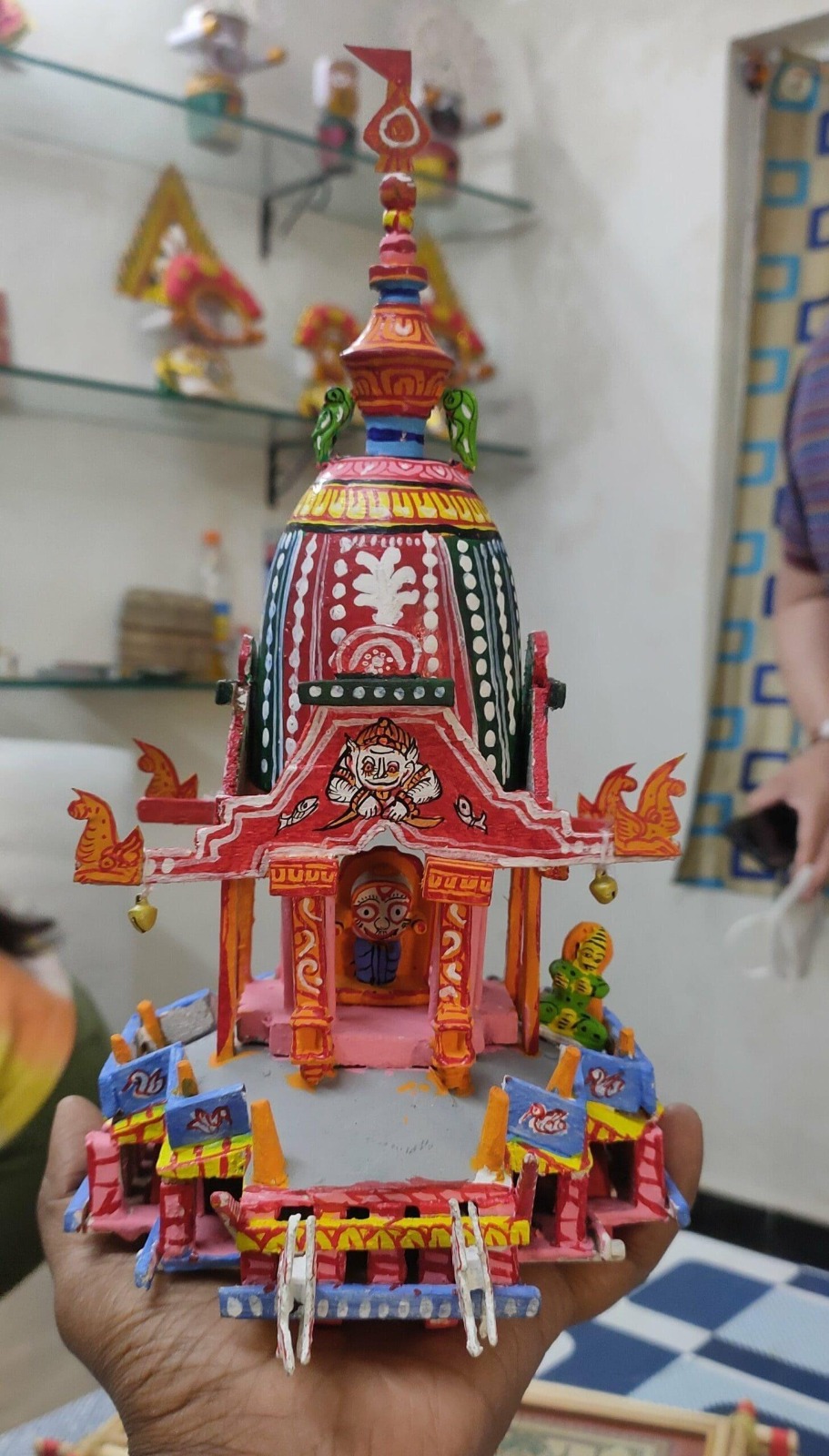
Explaining the inspiration behind his work, Rao reportedly said he wanted to celebrate this year's Rath Yatra by recreating the three sacred chariots in miniature form. "The world-famous Rath Yatra will be celebrated on July 16. Lord Jagannath comes out to visit His aunt's house, allowing devotees to have His darshan. Keeping this tradition in mind, I created these three chariots using areca palm leaves, with the idols carved from neem wood. It took me seven days to complete them," he said. Rao added that through his artwork he wished devotees a joyous Rath Yatra and prayed that Lord Jagannath's blessings bring health, peace and well-being to everyone.
For centuries, the Rath Yatra has symbolised one of Hinduism's most inclusive traditions. Unlike many temple rituals confined within sanctums, Lord Jagannath comes out to meet the people. The annual procession transforms Puri into a sea of humanity where social status, caste, language and region dissolve into a shared act of faith. The ropes of the three chariots are pulled not by a chosen few but by thousands of ordinary devotees, making participation itself a sacred offering.
The miniature chariots echo that same spirit. They remind devotees that faith does not always need grand monuments or elaborate rituals. Sometimes, it finds expression in the patient hands of an artisan determined to preserve a centuries-old tradition through extraordinary craftsmanship. In an age dominated by technology and mass production, such handmade creations also reflect the continuity of India's living cultural heritage, where art remains inseparable from worship.
The choice of neem wood carries its own significance. The sacred wood has traditionally been associated with the idols of Lord Jagannath, while the chariots themselves recreate, in miniature, the grandeur of the annual festival that has inspired devotees for generations.
The timing of the artwork is equally significant. After the Netrotsav and Nabajaubana Darshan, the annual Rath Yatra will commence in Puri on July 16, when the three deities will leave the Jagannath Temple for the Gundicha Temple in one of the world's largest chariot festivals. The nine-day celebration will be followed by Hera Panchami on July 20, the Bahuda Yatra (return journey) on July 24, Suna Besha (the golden attire ceremony) on July 25, and conclude with Niladri Bije on July 27, when the deities ceremonially return to the sanctum of the Jagannath Temple.
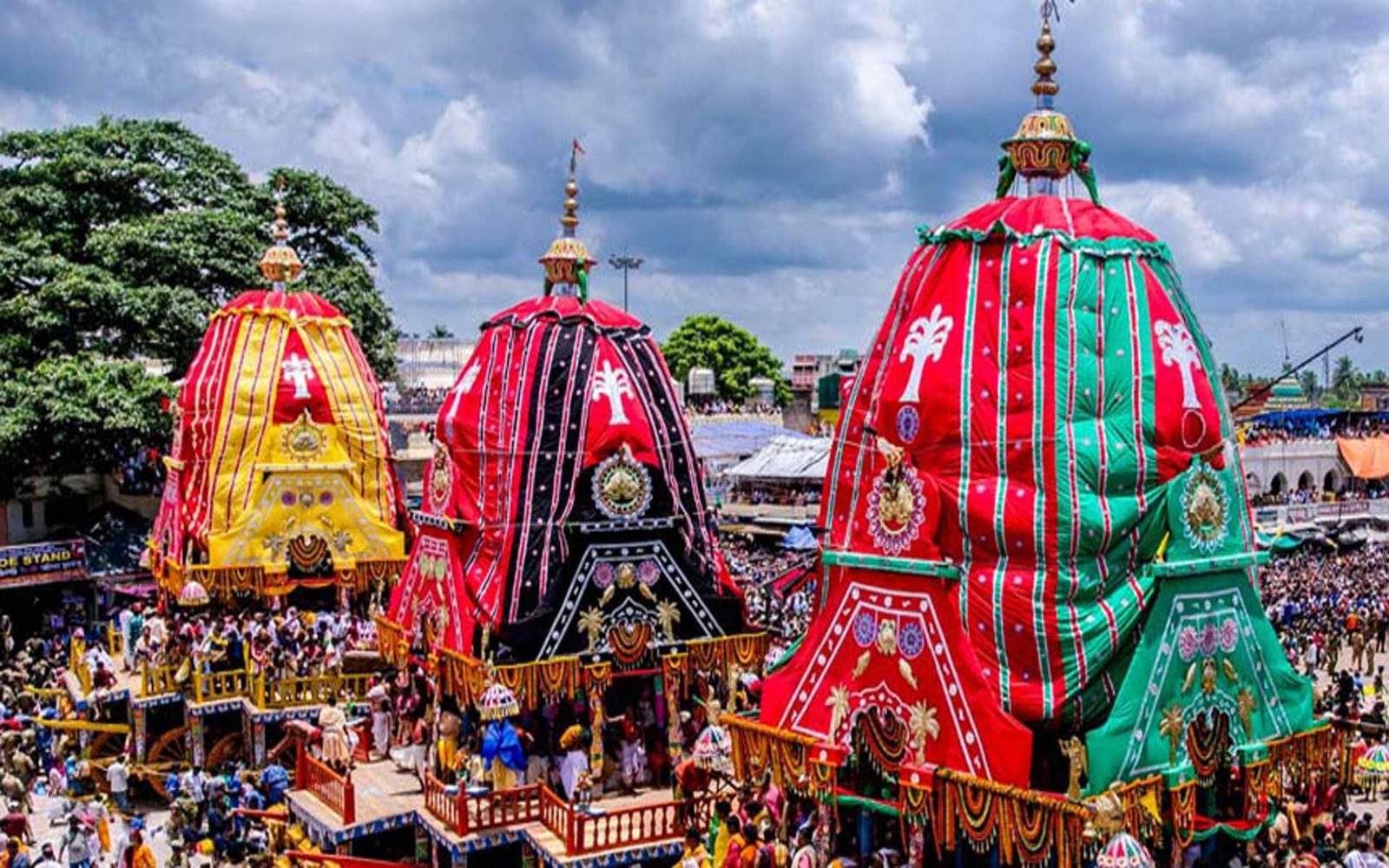
As Puri enters the final phase of preparations for the annual Rath Yatra beginning on July 16, the city is witnessing a steady stream of devotees despite persistent monsoon showers. While the rains have done little to diminish the faith of pilgrims eager to witness Lord Jagannath's journey to the Gundicha Temple, they have added another layer of complexity to the elaborate security and crowd-management arrangements. Authorities have deployed an extensive multi-layer security plan, backed by thousands of police personnel, surveillance from land, sea and air, and enhanced emergency response systems to ensure that one of the world's largest religious gatherings concludes safely and smoothly. In Puri, where faith has always been stronger than the monsoon, the chariots are once again ready to roll.