King Shantanu of Hastinapura, a central figure in the Mahabharata, made pivotal decisions that influenced the epic's narrative, including his marriages to Goddess Ganga and later, Satyavati.
Bhopal July 1, 2026
Every great story has a beginning. The Mahabharata did not begin on the battlefield of Kurukshetra, nor with the rivalry between the Pandavas and the Kauravas. It began much earlier in the royal court of Hastinapura, with a king whose personal decisions quietly shaped the destiny of an entire kingdom. His name was Shantanu. While history remembers warriors like Bhishma, Arjuna and Karna, it was Shantanu's choices that laid the foundation of one of the greatest epics ever told.
King Shantanu belonged to the illustrious Kuru dynasty, which ruled Hastinapura, one of the most powerful kingdoms of ancient India. He was known as a wise and just ruler who valued truth, fairness and duty. Under his leadership, the kingdom prospered, trade flourished and the people lived in peace. To his subjects, Shantanu was an ideal king. Yet destiny had prepared a role for him that would extend far beyond the boundaries of his kingdom.
One day, while hunting along the banks of the sacred Ganga, Shantanu saw a woman of extraordinary beauty and grace. She was none other than Goddess Ganga, who had taken human form. The king was deeply drawn to her and asked her to marry him. Ganga agreed, but only on one condition. Shantanu must never question her actions, no matter how unusual or painful they appeared. The day he broke that promise, she would leave him forever. Blinded by love and convinced that his happiness lay with her, Shantanu accepted the condition without hesitation. Soon they were married, and before long, their first child was born. But what followed was beyond anything the king could have imagined.
To Shantanu's horror, Ganga carried the newborn to the river and immersed the child in its waters. The king watched in disbelief, but he remained silent because of the promise he had made. The same heartbreaking scene unfolded again when the second child was born, and then the third, the fourth and the fifth. One after another, seven sons were born and each was consigned to the river.
Every time, Shantanu's heart broke as a father. Yet every time, he chose silence over confrontation. He was torn between two duties-the promise he had made to his wife and the love he felt for his children. It was perhaps the greatest emotional struggle of his life, one that no king, however powerful, could escape.
When the eighth son was born and Ganga once again walked towards the river, Shantanu could no longer contain his grief. He stopped her and demanded to know why she was
taking away their children. In that single moment, he broke the promise that had held their marriage together.
Ganga did not react with anger. Instead, she revealed the truth. The eight children were the eight Vasus, celestial beings who had been cursed to be born on earth because of an offence they had committed. The first seven were destined to be released from the curse immediately after birth. The eighth Vasu, however, had played the principal role in the offence and therefore had to live a full human life.
That eighth child was Devavrata. Having fulfilled her purpose, Ganga left Shantanu, taking the infant with her. Before departing, she assured the king that she would raise the boy with the finest teachers and return him when the time was right.
Years passed. One day, Ganga returned, bringing with her a young prince who had mastered the Vedas, warfare, administration and the principles of dharma under the guidance of renowned sages. Devavrata possessed every quality expected of a future ruler. Shantanu welcomed his son with immense joy and declared him the crown prince of Hastinapura. At last, it seemed that peace had returned to the royal household.
But fate had another chapter waiting. Some years later, while travelling near the banks of the Yamuna, Shantanu encountered a young woman whose fragrance and quiet dignity caught his attention. She was Satyavati, the daughter of a fisherman. The king wished to marry her, unaware that this decision would compel Devavrata to make the most extraordinary sacrifice of his life, a vow so severe that it would earn him the name by which the world remembers him: Bhishma.
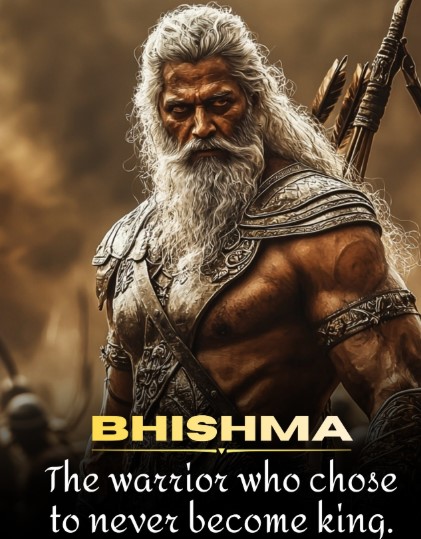
King Shantanu's story is much more than a tale of love. It is the story of how personal choices can shape public history, how promises carry consequences, and how even the noblest rulers cannot foresee where the path of destiny will lead. Without Shantanu, there would have been no Bhishma. Without Bhishma, the story of the Mahabharata would have unfolded very differently.