Devotees gathered at Jagannath Temple for the Snan Yatra, kicking off the preparations for the Rath Yatra, one of the world's oldest chariot festivals.
Bhopal/ Puri, June 30, 2026
Amid the ongoing debate over donations to Ayodhya's Ram Mandir, an ocean of devotees gathered at the Jagannath Temple in Puri on Monday for the sacred Snan Darshan, offering a timely reminder that Sanatan traditions continue to draw millions through faith rather than fanfare. Far from fading, this civilisational connect appears to be growing stronger, with an increasing number of young people turning to India's mythology, spirituality and timeless traditions in search of meaning and identity.
Every year, weeks before millions gather on the streets of Puri to pull the towering wooden chariots of Lord Jagannath, an intimate ritual unfolds inside the 12th-century Jagannath Temple. It is a ceremony that is as spiritual as it is symbolic. Before the Lord begins his annual journey to meet his devotees, he first falls ill.
The ritual began on Monday with Dev Snan Purnima, when Lord Jagannath, his elder brother Balabhadra, sister Subhadra and Sudarshan were ceremonially bathed with 108 sacred pots of water in the presence of thousands of devotees. The grand bathing ceremony, known as Snan Yatra, marks the formal beginning of preparations for the world-famous Rath Yatra.
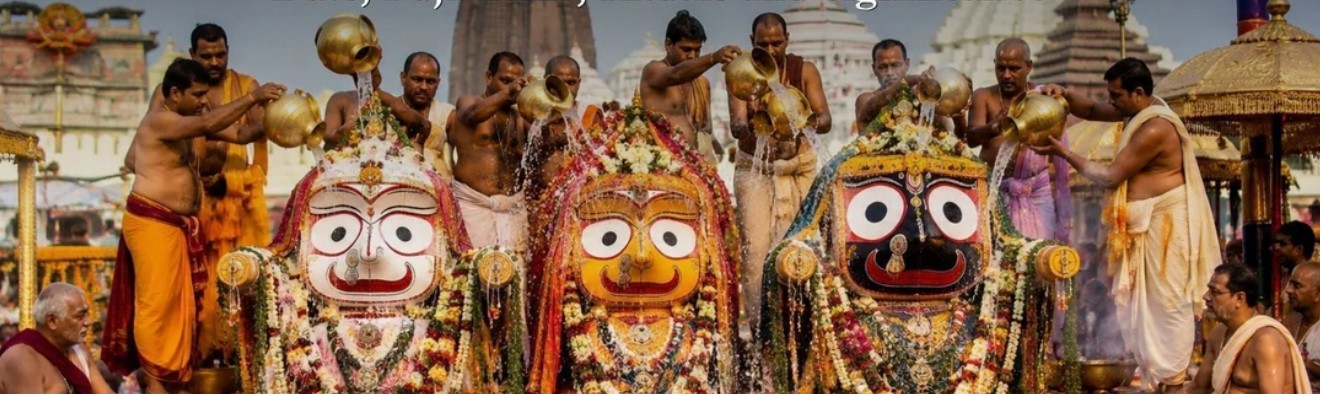
Following the sacred bath, the deities were dressed in the distinctive Gaja Vesha, or elephant attire, one of the most awaited appearances in the Jagannath tradition. But the celebration is immediately followed by a period of silence. According to centuries-old belief, the elaborate bathing leaves the deities unwell. They are therefore taken into Anasara, a 14-day ritual seclusion during which the temple's main sanctum remains closed.
Temple priests believe the deities are treated just like members of a family. Traditional Raj Vaidyas prepare herbal medicines and a special diet to restore their health before they reappear for devotees. This period of seclusion only heightens the anticipation for their return. The temple doors reopen a day before the Rath Yatra during Nava Jaubana Darshan, when devotees get the first glimpse of the rejuvenated deities. It is followed by the annual Rath Yatra, regarded as one of the world's oldest and largest chariot festivals, celebrated during the bright fortnight of the Hindu month of Ashadh.
The festival transforms the Grand Road, or Bada Danda, into a sea of humanity. Lord Jagannath, Lord Balabhadra and Devi Subhadra leave the sanctum of the Jagannath Temple and travel nearly three kilometres to the Gundicha Temple, where they stay for a week before returning in the Bahuda Yatra. One of the most fascinating traditions is that the three gigantic wooden chariots are built afresh every year. Skilled carpenters belonging to families that have inherited this sacred responsibility for generations construct the chariots using wood from selected trees such as phassi and dhausa, sourced from Odisha's forests, particularly the former princely state of Dasapalla. The timber traditionally travels through the Mahanadi river before reaching Puri for construction.
Each chariot follows precise specifications preserved over centuries. They are richly decorated and lined up outside the temple's eastern entrance, the Singhadwara, before the procession begins. Every chariot carries nine Parsva Devatas, painted wooden representations of different deities, besides a charioteer and four horses, making each one a moving temple rather than merely a ceremonial vehicle.
Unlike most temple festivals where devotees seek blessings from within the shrine, the Rath Yatra reverses the tradition. Here, it is believed that the Lord himself comes out to meet the people, irrespective of caste, creed or social status. It is this rare symbolism of inclusiveness that has made the Jagannath Rath Yatra one of Hinduism's most enduring public celebrations.
As the temple doors close for the 14-day Anasara, the silence inside the Jagannath Temple marks the beginning of an extraordinary journey. When the three towering chariots finally roll out on July 16, they will carry more than wooden idols. They will carry a centuries-old tradition that celebrates faith, craftsmanship, inclusiveness and the belief that the divine does not wait inside the temple for devotees, but comes out to meet them.
Authorities have deployed over 2,400 police personnel, while the Odisha Police Cyber Cell has blocked 46 fake websites offering fraudulent hotel bookings and VIP darshan services.