The Halali Reservoir in Madhya Pradesh, known for its serene beauty and rich biodiversity, carries a name steeped in the bloodshed of its historical origins. As policymakers meet, the site's tumultuous past is revisited.
Jagdishpur/ Bhopal July 19, 2026
On most mornings, the Halali Reservoir is a picture of calm. Fishermen cast their nets into its still waters. Migratory birds descend on its vast expanse during winter. Travellers heading from Bhopal to Vidisha slow down briefly to admire the scenic landscape before continuing their journey. Few among them realise that the river beneath the reservoir carries a name believed to have emerged from one of the bloodiest episodes in the history of central India.
The coincidence is striking. As the Madhya Pradesh Cabinet meets on Sunday at nearby Jagdishpur, also known as Islamnagar, under the government's "Destination Cabinet" initiative, the spotlight once again turns towards a region where history, heritage and governance have intersected for more than three centuries.
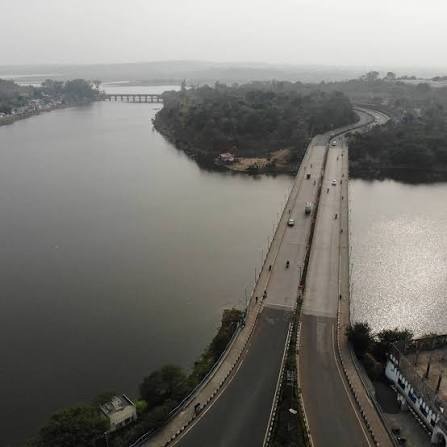
Built in 1973, the Halali Reservoir stretches across Bhopal, Raisen and Vidisha districts, nearly 40 kilometres from the state capital. Spread over thousands of hectares, it is among the important reservoirs of central Madhya Pradesh, supporting irrigation, fisheries and local livelihoods. The reservoir is home to commercially important fish species, including catla, rohu, mrigal, wallago and chitala, while its surrounding landscape has become a favoured destination for nature lovers and birdwatchers.
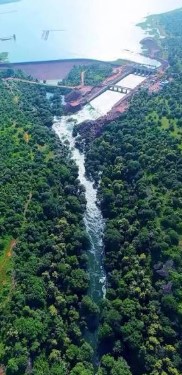
Yet the river feeding this reservoir was not always known as Halali. According to historical accounts, it was once called the Thal River, while some local traditions also refer to it as Banganga. The present name is generally associated with a violent episode that unfolded in the early eighteenth century, when political authority in central India was changing rapidly following the weakening of the Mughal Empire.
At the centre of that transformation stood Dost Mohammad Khan, an Afghan soldier who arrived in India as part of the Mughal military before establishing what later became the princely State of Bhopal. His rise coincided with intense struggles among Rajput, Gond and Mughal powers across the Malwa region, where control over forts, trade routes and strategic settlements often determined political survival.
One such settlement was Jagdishpur, strategically located on the route linking present-day Bhopal with Vidisha, Sanchi and eastern Malwa. Long before modern highways connected these regions, the town served as an important administrative and military centre ruled by the Devda Chauhan Rajputs.
Historical narratives describe 1715 as a decisive year. According to these accounts, Dost Mohammad Khan invited the Devda Chauhan rulers for negotiations under the promise of peace. What followed has been recorded by several historians as an act of deception. The Rajput chiefs and their followers were allegedly served intoxicants before being attacked and killed. Their bodies were thrown into the nearby river, whose waters, local tradition says, turned red with blood. It is this episode that historians generally associate with the river acquiring the name "Halali", a word linked to slaughter.
The events around Jagdishpur extended beyond the Rajput conflict. The region also became closely associated with Rani Kamlapati, the Gond queen remembered in historical accounts for seeking Dost Mohammad Khan's assistance after the killing of her husband. Their relationship later deteriorated amid political conflict, eventually leading to the expansion of Dost Mohammad Khan's authority over the region. These episodes continue to occupy an important place in the historical narrative surrounding the formation of the Bhopal State.
Following these developments, Jagdishpur gradually came to be known as Islamnagar, while the centre of power shifted to the growing city of Bhopal. The princely state later achieved distinction under the remarkable rule of the Begums of Bhopal, one of the few Muslim-ruled states governed for long periods by women. In the twentieth century, that royal lineage became linked to the Pataudi family through the marriage of Sajida Sultan, daughter of Nawab Hamidullah Khan of Bhopal, to Nawab Iftikhar Ali Khan Pataudi. Their son, Mansoor Ali Khan Pataudi, would go on to become one of India's most celebrated cricket captains, giving the region's royal history a connection recognised far beyond Madhya Pradesh.
Today, Jagdishpur's restored palaces and gateways stand as protected heritage monuments. The nearby Halali Reservoir, meanwhile, reflects a very different image-one of ecological richness, economic value and natural beauty. Together, however, they narrate the same historical journey that witnessed the rise of the Bhopal State.
That is what makes the timing of Sunday's Cabinet meeting particularly significant. Chief Minister Dr Mohan Yadav's "Destination Cabinet" initiative seeks to move governance beyond the confines of Vallabh Bhawan and into places that define Madhya Pradesh's cultural and historical identity. Previous meetings have been held at Jabalpur, Singrampur, Maheshwar, Rajwada, Pachmarhi, Khajuraho and Nagalwadi, each chosen for its association with personalities such as Rani Durgavati, Lokmata Ahilyabai Holkar, Raja Bhabhut Singh, tribal traditions or UNESCO-recognised heritage.
The visit to Jagdishpur therefore offers more than an administrative backdrop. It invites renewed attention to a landscape where history is written not only in palaces and forts but also in rivers, roads and place names.
Across India, the names of cities, railway stations and public roads have increasingly become subjects of historical review. Prayagraj, Pandit Deendayal Upadhyay Nagar and several other renaming exercises have reflected attempts to reconnect places with older historical identities. Against that backdrop, the story of Halali raises a quieter but equally thought-provoking question. If the river's present name is rooted in an episode of massacre remembered through historical accounts, should that memory continue to define one of Madhya Pradesh's most beautiful reservoirs, or should the older name, Thal, receive fresh consideration?
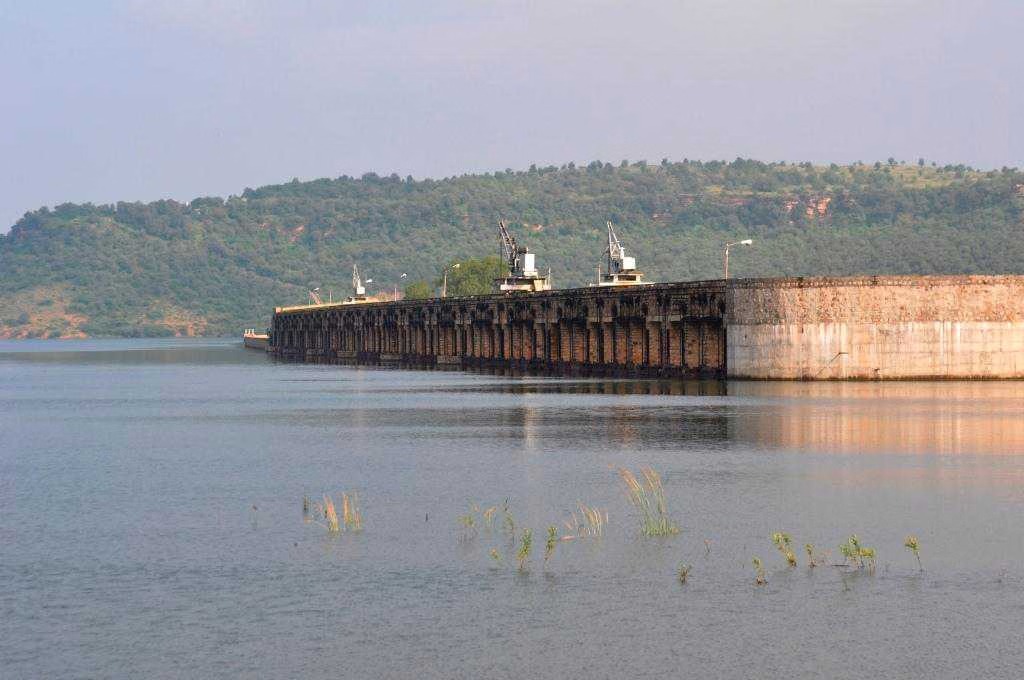
There may be no simple answer. Renaming a river involves history, heritage, administrative procedure and public consensus. Yet the question itself deserves attention because names are more than geographical markers. They become part of a society's collective memory.
The waters of Halali no longer run red. They sustain farms, nourish wildlife and reflect the changing seasons. But the name continues to preserve the memory of a turbulent chapter in central India's past. As policymakers gather just a few kilometres away to shape the state's future, the quiet river beside them offers a reminder that history often survives in the places we pass every day, sometimes unnoticed, yet never entirely forgotten.