Chief Minister Vishnu Deo Sai of Chhattisgarh conducted a Jan Chaupal under a banyan tree, directly addressing citizens' concerns and announcing new initiatives.
Raipur/Bhopal June 10, 2026
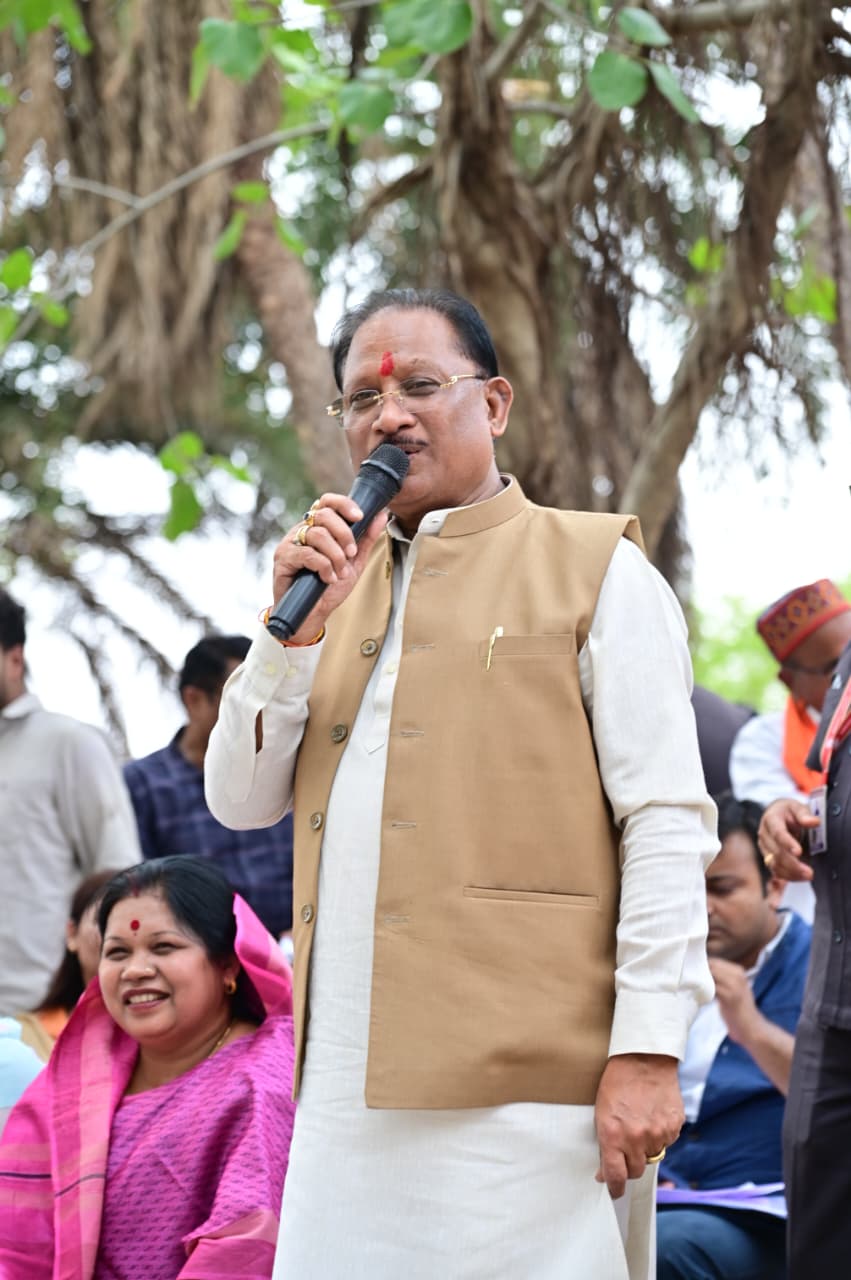
In an age when governance is often associated with offices and official meetings, Chhattisgarh Chief Minister Vishnu Deo Sai chose a different setting. He sat under a large banyan tree in Thathari village of Sakti district and listened directly to the people.
The Jan Chaupal was held in early June as part of the state's Sushasan Tihar campaign. There were no barriers between the Chief Minister and the villagers. Sitting on the ground among them, he heard their concerns, complaints and suggestions. The gathering became a direct conversation between the government and the people. CM Sai said good governance cannot be measured only through files and reports. The real test is whether government schemes are reaching the last person in society.
During the interaction, he informed villagers that the 28th instalment of the Mahtari Vandan Yojana had been transferred to the bank accounts of women beneficiaries. The announcement was welcomed by many women present at the gathering. The Chief Minister asked residents about drinking water supply, electricity services and other daily issues. He encouraged them to speak openly and provide honest feedback about government programmes.
To strengthen grievance redressal, CM Sai announced that a modern CM Helpline would soon be launched. Citizens will be able to register complaints through a toll-free number and WhatsApp. The system is expected to ensure faster and time-bound solutions. The Jan Chaupal also led to several development announcements. A new Aarti Ghat will be constructed near the historic Chaturbhuj Vishnu Temple to serve devotees. The government has also approved the opening of a bank branch in Thathari, fulfilling a long-pending demand of local residents.
In another important announcement, the Chief Minister directed the District Collector to prepare a proposal for granting Nagar Panchayat status to Thathari. Road development works for the area have already received approval. Officials also reviewed several central welfare schemes during the programme. Villagers were informed about the Pradhan Mantri Awas Yojana, which provides permanent houses to poor families. Information was also shared about the Pradhan Mantri Surya Ghar: Muft Bijli Yojana, which aims to reduce electricity bills through rooftop solar installations.
Religious tourism schemes were also highlighted. The Shri Ramlala Darshan Yojana helps devotees visit Ayodhya, while the Mukhya Mantri Teerth Darshan Yojana supports pilgrimage journeys for senior citizens. CM Sai said trust grows when leaders meet people face to face. He instructed officials to resolve public grievances with sensitivity and urgency.
Highlighting the broader transformation taking place across Chhattisgarh, Chief Minister Sai pointed to Bastar as an example of how development and public participation can change the course of a region. For decades, Bastar was known more for left-wing extremism, violence and security challenges than for its rich tribal culture and natural resources. Many villages remained cut off from basic facilities, while development projects struggled to reach remote areas. Today, however, the situation is gradually changing. Roads, schools, healthcare facilities, mobile connectivity and welfare schemes are expanding their footprint across the region. Tribal communities are increasingly participating in government programmes and local development initiatives. Markets, tourism activities and livelihood opportunities are also growing in several districts. According to the Chief Minister, the shift reflects a new phase where confidence in governance is replacing fear and isolation. He said the government's focus remains on ensuring that the benefits of development reach every tribal family while preserving the unique cultural identity of Bastar. Member of Parliament Kamlesh Jangde and Sanyogita Yudhvir Singh Judev were also present during the Jan Chaupal.